
Last updated September 20, 2026
Free on-site gate assessment - hinges, posts, and your LiftMaster or Nice gate operator checked before anything is quoted
The assessment is free and the quote is the invoice.


 Before
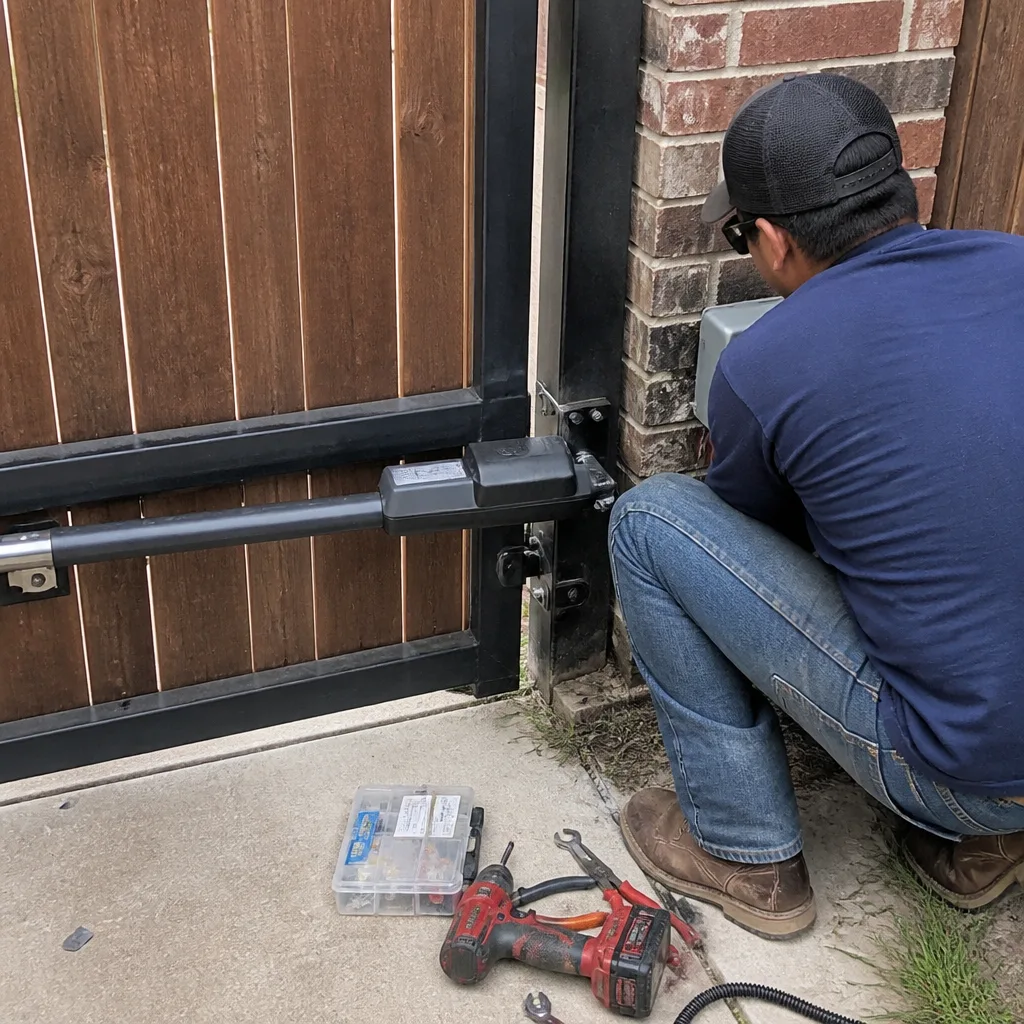 After
After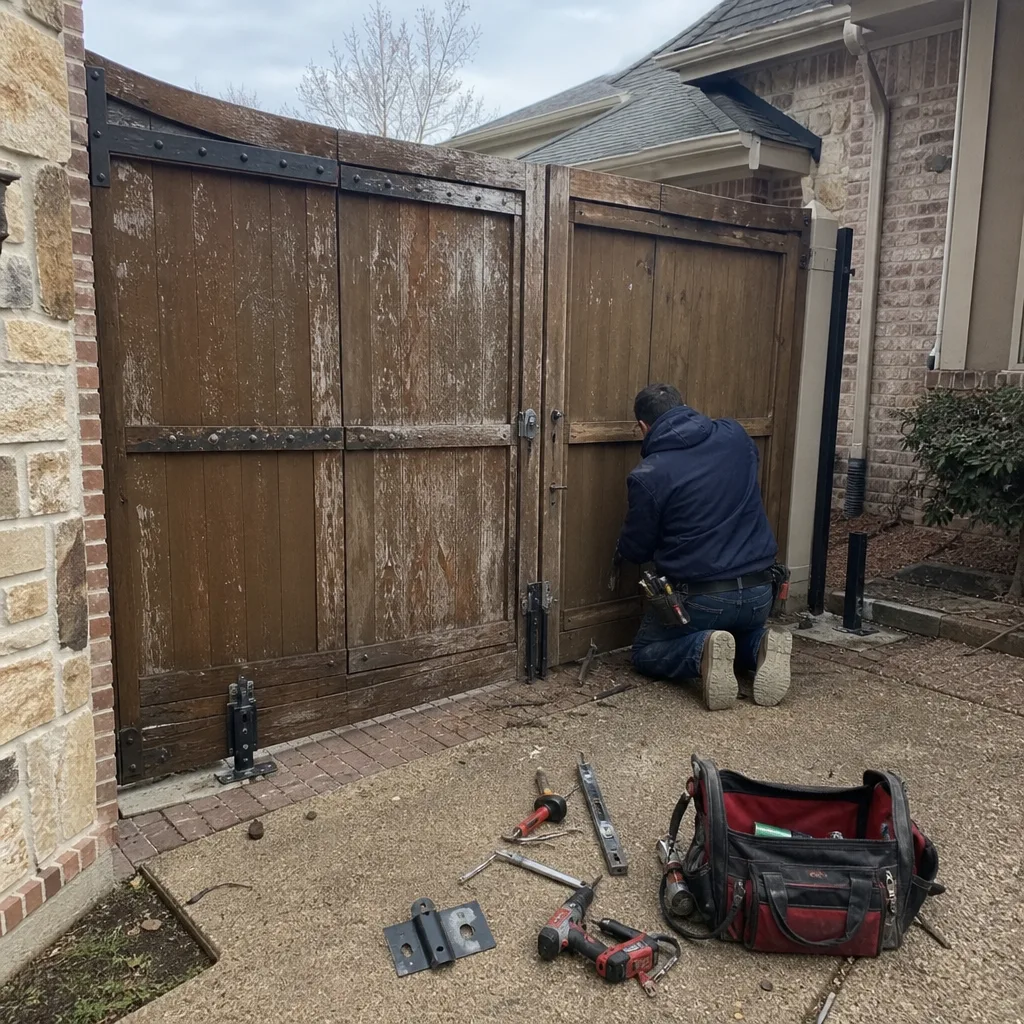 Before
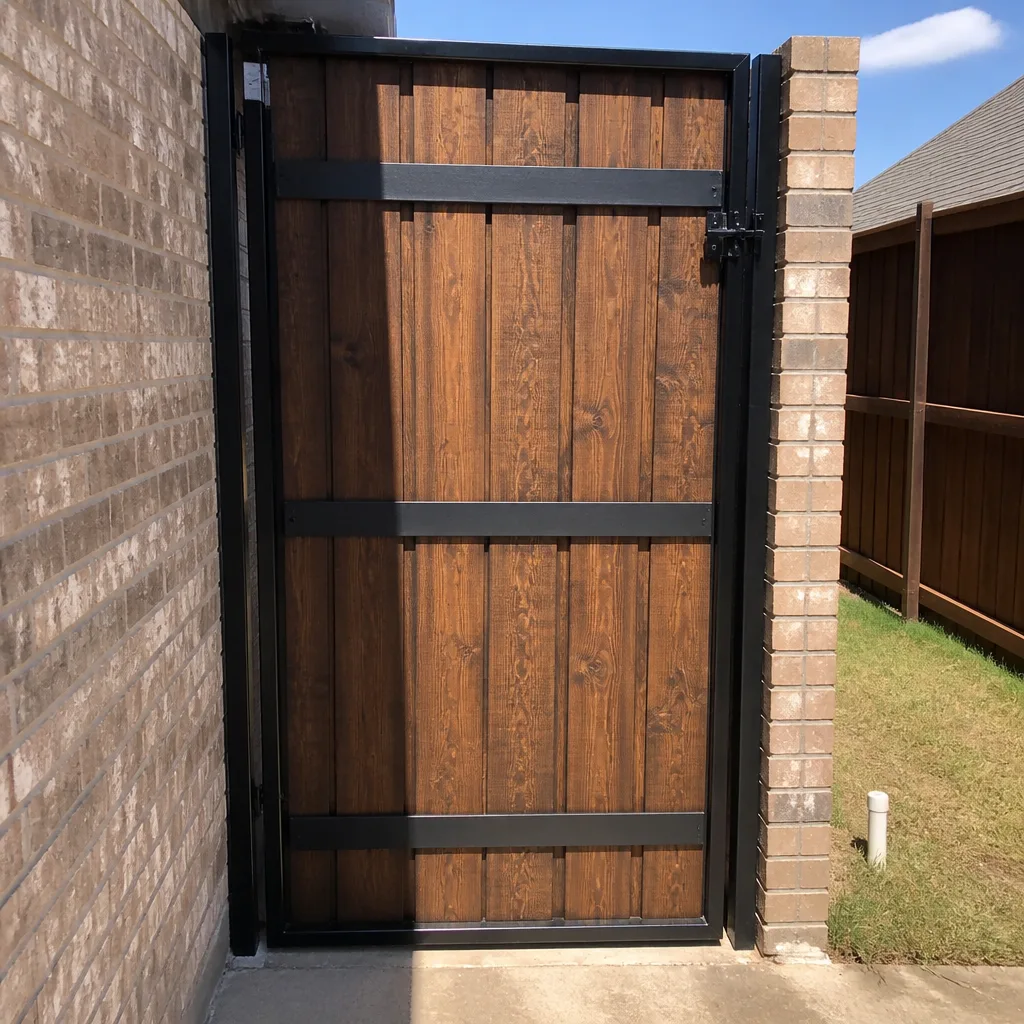 After
After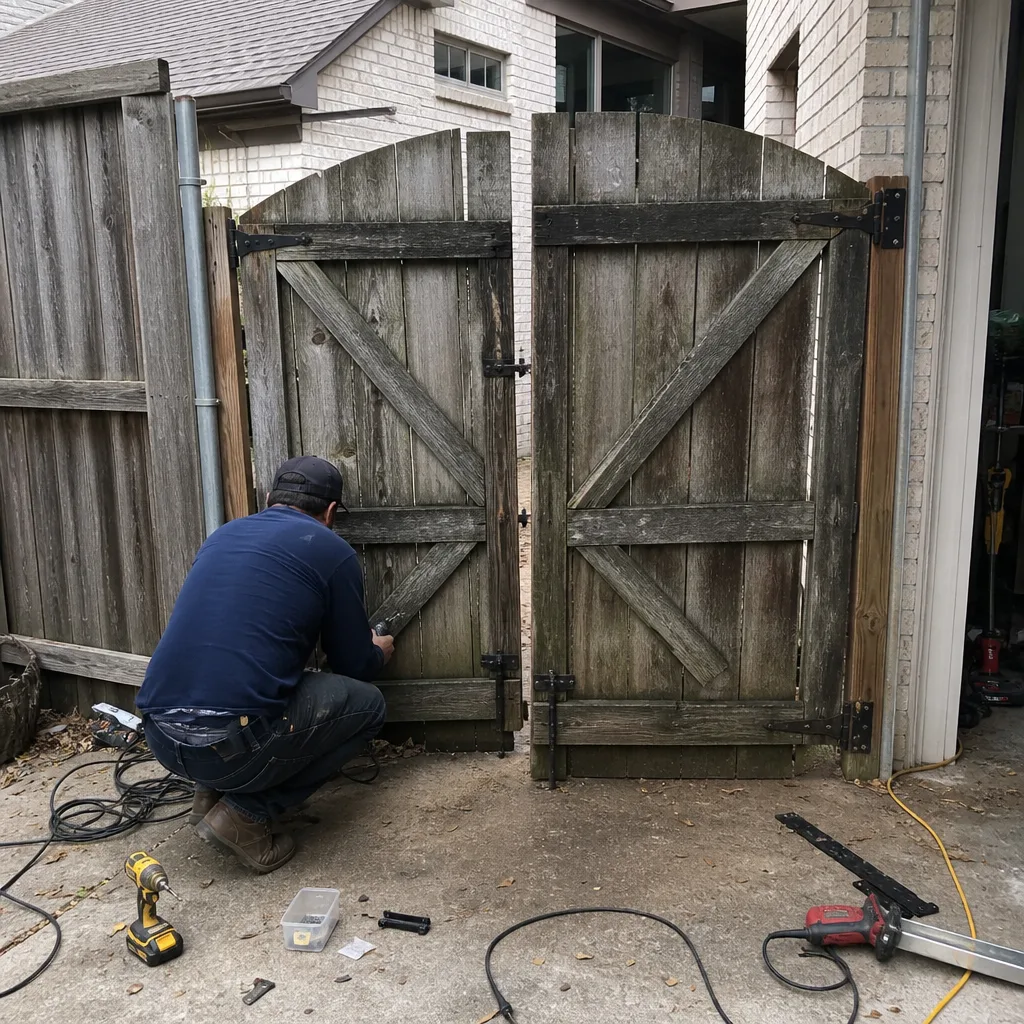 Before
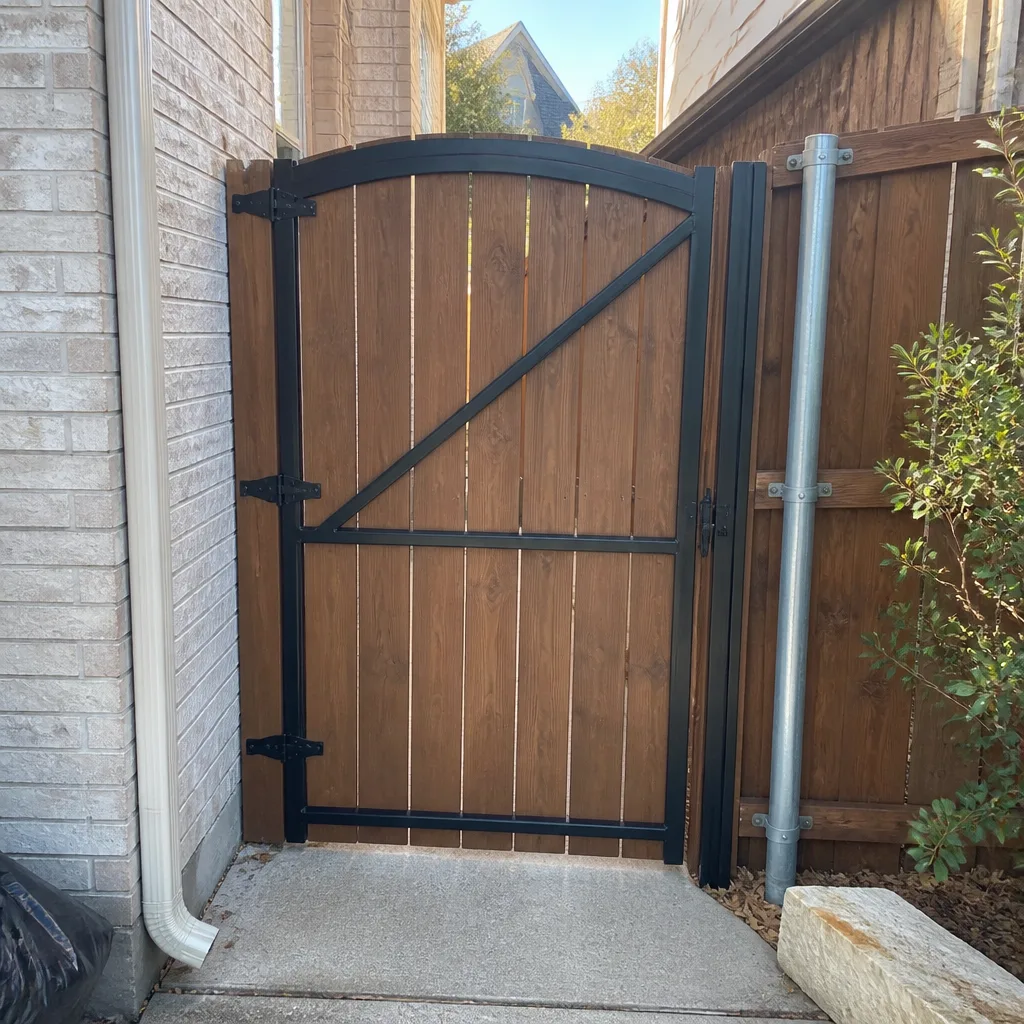 After
AfterThe Complete Guide to Gate Repair in Frisco
The second technician costs more than the first, not because the repair changed, but because nobody wrote down what the first one did. In Frisco, where the soil under your gate posts moves more than the gate itself does, that missing record is the difference between a $180 fix and a $1,400 redo. This guide walks the full path from the first click or grind you hear to a signed written scope, so you can tell a symptom from a source and know exactly what a defensible repair in Frisco looks like before anyone touches your driveway. You’ll learn the three root causes behind most Frisco gate failures, how to read a written quote, what documentation a proper job should leave behind, and when same-day containment makes sense versus a staged repair.
Quick Answer
Our Gate Repair services in Frisco TX typically cost between $180 and $1,400 depending on whether the problem is a misaligned sensor, a worn hinge, a failing motor, or foundation movement under the posts. Most Frisco gate failures trace back to one of three root causes: foundation movement from expansive clay soil, undertorqued hardware, or underdocumented prior repairs. The fastest way to stop paying twice is to insist on a written price before work starts and a documented record of what was changed when the technician leaves.
Table of Contents
- The Three Root Causes Behind Most Frisco Gate Failures
- Symptom Fix vs. Root Cause Fix: What the Price Difference Means
- Why North Texas Clay Soil Is the Starting Point for Gate Repair
- How to Read a Written Scope of Work Before You Sign
- What a Complete Post-Repair Documentation Package Should Include
- The Repair Decision Tree: Same-Day vs. Staged
- What Gate Repair in Frisco Costs, Line by Line
- Common Mistakes to Avoid
- When to Call a Professional
- Frequently Asked Questions
BeforeAfterThe Three Root Causes Behind Most Frisco Gate Failures
We’ve repaired and installed more than 22,000 gates since 2014, and the failures we see in Frisco follow a pattern so consistent it borders on predictable. The gate doesn’t open, or it grinds, or it sags, or it reverses halfway, and almost every time, the chain ends at one of three places. Foundation movement. Undertorqued hardware. Underdocumented prior repairs.
Foundation movement is the big one in Frisco, and honestly, in most of Collin and Denton counties. The soil here is expansive clay. It swells when wet and shrinks when it dries, and that cycle moves gate posts millimetres at a time across a season. A gate that was perfectly level in March can be dragging on the latch post by August. But here’s the thing: the gate didn’t fail. The ground moved. Until the post is reset and the alignment corrected, every adjustment you make is temporary. We’ll get into exactly how that works in a later section.
Undertorqued hardware means bolts and brackets that were never tightened to the manufacturer’s torque specification, or that loosened as the gate operated. A single undertorqued hinge bolt can throw a gate out of level enough to strain the motor, trip the safety edges, and wear out a limit switch prematurely. We find this constantly on gates installed by builders who finished the job with a hand wrench and a guess. The repair is usually simple. The failure pattern it causes is anything but.
The third cause-one we explore in our DIY vs Professional Gate Repair: The Frisco Homeowner’s Decision Guide-is underdocumented prior repairs. A technician shows up, adjusts the limit switch, mentions it to the homeowner, collects payment, and drives away. No note on what it was set to, no picture of the new position, no part number if something was replaced. A year later, the same symptom returns, and a different technician starts from zero. That homeowner pays twice to rediscover the same problem. That’s the exact pattern this guide exists to break.
Symptom Fix vs. Root Cause Fix: What the Price Difference Means
The most common gate symptom in Frisco is also the most misunderstood: the gate stops mid-cycle and reverses, or it opens fine but struggles to close. That’s a limit switch and safety-edge symptom on its face. The fast fix is to adjust the limit switch, or reposition the photo-eye, or clean the rack if it’s a slide gate. That’s a containment repair. It’s typically billable in the $110 to $190 range, and it’s done in less than an hour.
But a containment repair and a root-cause fix are not the same thing, and the difference shows up in what happens next.
Symptom fix (containment): The technician adjusts the limit switch so the gate stops at the right place. The gate works. Two months later, it’s doing the same thing again, because the hinge the gate hangs from has sagged about 5 degrees, and that sag is loading the motor differently every open-close cycle. The limit switch didn’t drift; the geometry did.
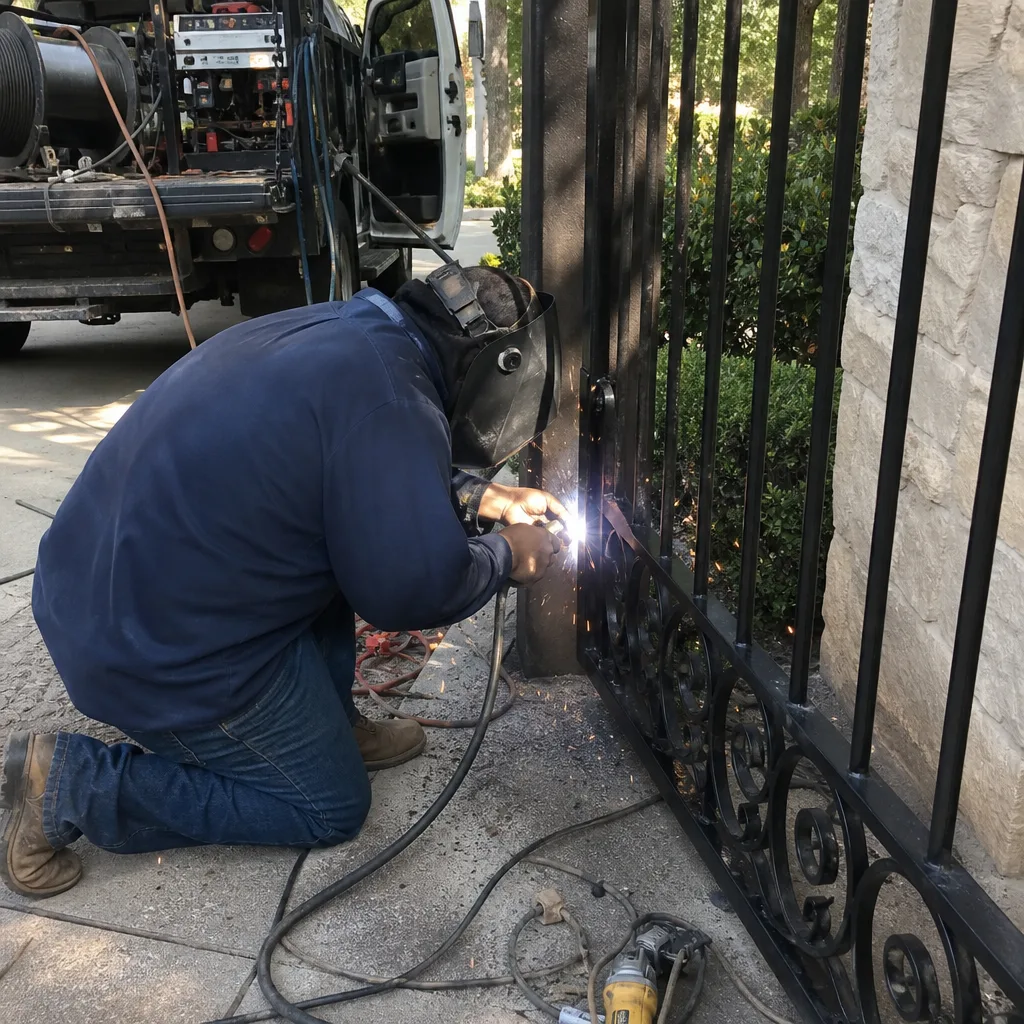
Root-cause fix (correction): The technician measures the hinge plane, finds the sag, and corrects it, either by shimming and retorquing the hinge bracket or by replacing a worn hinge barrel outright. Then, and only then, does the limit switch get set, because now it’s being set on a gate that hangs true. That job lands in the $260 to $480 range depending on hinge condition and whether the gate has to come off its posts briefly.
The price difference between symptom and root cause is real, but the lifetime cost of the symptom-only approach is dramatically higher. A homeowner who repeats a $150 containment repair four times in two years has spent $600 and still owns the problem. The same homeowner who pays $380 once owns the fix.
The way you tell which one a technician is proposing is simple. If the written scope says “adjust limit switch” but never mentions measuring the hinge plane or checking post alignment, it is, by definition, a symptom fix. It might be the right call if the root cause is already known and stable. It is not the right call if nobody has measured anything yet.
Why North Texas Clay Soil Is the Starting Point for Gate Repair
No serious gate diagnosis in Frisco starts at the motor. It starts at the posts. And the reason is the soil.
Frisco sits on the Blackland Prairie, a band of highly expansive clay soil that runs through Collin County and much of North Texas. In practical terms, that soil expands when it takes on moisture and contracts when it loses it. A single season of wet springs and dry summers can shift the ground around a gate post by enough to move the post itself. Not the gate, the post. The thing the gate hangs from and latches to.
Once a post moves, every part of the gate’s geometry changes. The hinge plane tilts. The latch doesn’t line up. The motor has to work harder to move the gate through what used to be level travel. The limit switches, safety loop, and photo-eye all start misbehaving because the gate isn’t where the system thinks it is. The motor isn’t failing. The motor is responding to changed physics.
The only real fix for a moved post is resetting it. Depending on the gate size, slab condition, and whether the post base is weldable, post reset in Frisco typically lands between $350 and $800 for a standard single-car swing gate. It may require cutting the weld at the base, digging back the concrete, resetting the post plumb, and repouring with deeper embedment. Sometimes the post can be shimmed and reinforced without a full reset, but that’s a call that should be made from under the gate, not from a picture.
If anyone quotes you a motor replacement without inspecting the posts, ask them one question: “Did you check the gate plane?” If the answer is no, you’re being quoted for a symptom fix at replacement prices.
How to Read a Written Scope of Work Before You Sign
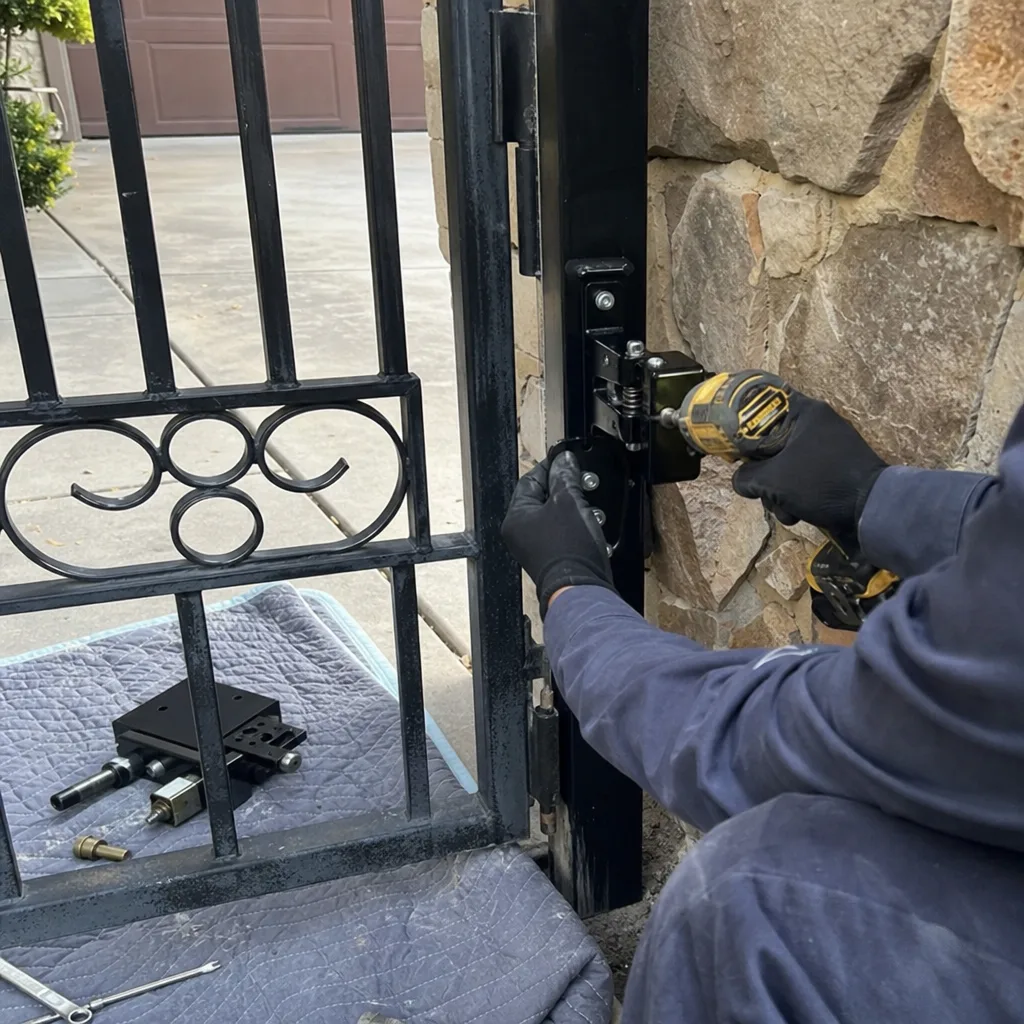
A written scope of work is not a receipt and it’s not a paragraph of promises. It’s a line-item list of exactly what will be done, with dollar figures attached, before tools are picked up. Reading one properly is a skill, and in the gate trade, it’s a skill that saves you money directly.
Here’s what belongs on any legitimate gate repair scope in Frisco:
- The diagnosis, in plain language, with measurements. Not “gate is off” but “hinge on the post side is sagging approximately 5 degrees below level, measured at the bracket.” If the diagnosis doesn’t mention measurements, the technician either didn’t take any or doesn’t intend to be held to them.
- Parts, listed by brand and part number. A scope that says “motor repair” is not a scope, it’s a theme. You should see the brand, the specific part, and ideally the part number. If the part hasn’t been confirmed yet because it’s behind a panel, the scope should say what will confirm it and what the decision criteria are.
- Labor, broken out from parts. Most gate companies bundle these; you can still ask for them separated. If labor is dramatically higher than parts on a small repair, ask what the labor includes. If it’s dramatically lower on a big repair, ask what’s being assumed out.
- What is explicitly NOT included. This is the line most quotes are missing, and it creates the most surprise invoices later. A full scope says what’s excluded: no painting, no concrete patch beyond the immediate work area, no code upgrades, no permit unless specified.
- The verification step. The scope should state how the repair will be tested before the technician leaves, and what you’ll receive as documentation. That documentation line is the single best predictor of whether the company stands behind the work or intends to disappear into silence.
The line items commonly missing from scopes, and therefore the ones that create on-site upsells later, are usually these: the cost of hauling away old hardware, the cost of rewiring if the original wire is corroded, the cost of concrete patching around any post work, and the cost of reprogramming additional remotes or keypads. Every one of these is legitimate work that a professional should anticipate. Every one of them should be priced or explicitly excluded before you sign. If they’re not, you don’t have a quote. You have an opening bid.
What a Complete Post-Repair Documentation Package Should Include
The single biggest predictor of a gate repair that holds up over time is what the technician leaves behind after the work is done. Most companies leave a verbal summary and an invoice. That’s it. A year later, when a new problem appears, neither the homeowner nor the new technician knows what the gate looked like before this problem started.
A complete documentation package is not a luxury. It’s the difference between paying once and paying twice. Here’s what it should contain:
- A written diagnosis record: what the symptom was, what was found, and how it was measured. Limit-switch readings, gap measurements, and hinge plane angles are all numbers a professional can write down in ninety seconds and a homeowner can show to any future technician.
- Photographs of the problem and the repair: the misaligned photo-eye before and after, the corroded wire removed, the new bracket installed, the post after resetting. Pictures are not decorative. They’re evidence of what condition the equipment was in, and they prevent endless re-diagnosis fees later.
- Torque specs for any hardware touched: if a hinge bracket was removed and reinstalled, the documentation should note what torque the bolts were set to, so the next technician can verify rather than guess.
- Any wiring changes, in a simple diagram or written description: what was connected to what, and what color wire now serves what function. In a city as prone to moisture swings and soil movement as Frisco, this has prevented hundreds of errors and at least as many misdiagnoses.
- Part numbers for anything replaced: actual, manufacturer-issued part numbers, not “new motor.” If a LiftMaster control board was replaced, you should know which one.
- Final test results: the gate cycled X times without error under the new settings, the safety loop was tested and passed, the photo-eye was verified at both closed and partially open positions.
At Vance Gate Repair Frisco, this is the standard on every job, and you’ll find more guides & resources on our blog. It grew out of a commercial access-control habit from years on commercial sites: if a system can’t be documented, it can’t be maintained. That habit carries over to residential driveway gates because a residential gate owner has all the same equipment and about five percent of the training. The documentation closes the gap.
The Repair Decision Tree: Same-Day vs. Staged
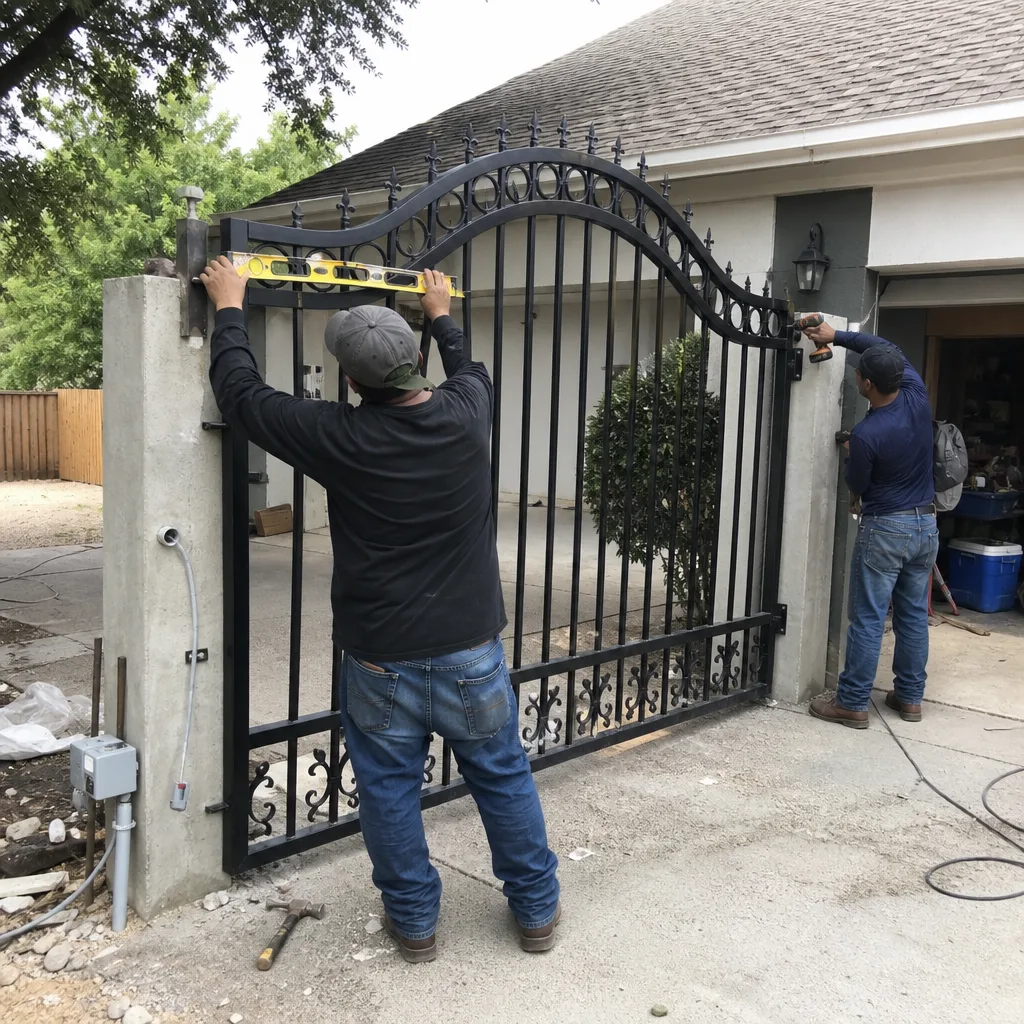
Not every gate failure in Frisco can be fixed in one visit, and a good technician will tell you that before the work starts. The inability to say that plainly is, in our experience, a stronger signal than any warranty language. Some problems are containable the same day. Some require parts that take days or weeks in the DFW supply chain. Some require concrete work that shouldn’t be rushed in Texas heat.
Here’s the decision tree we use, and it’s the one you should apply to any quote you receive:
- Is the gate unsafe or stuck in a position that blocks access? If the gate is stuck open and the house is unsecured, or stuck closed and you can’t get a car out, the priority is containment: secure the gate, disconnect the operator if needed, and make it manually operable. That’s a same-day call, every time, and it should be priced as containment.
- Is the root cause mechanical and measurable right now? Hinge sag, undertorqued brackets, misaligned photo-eyes, drift in limit switches. These are mechanical corrections that don’t need parts. If the post hasn’t moved, they can typically be done in the same visit.
- Does the root cause involve parts with local supply? Common parts for LiftMaster, BFT, and FAAC operators are frequently stocked across DFW, and a replacement control board or limit switch assembly can often be sourced within a day or two. If the part is a Mighty Mule or Ghost Controls unit on a residential swing gate, those parts often drop-ship and can take three to seven business days.
- Does the root cause involve concrete or post resetting? If the post has actually moved, you’re into staged repair. Digging out old concrete, resetting the post, and letting new pour cure correctly in Texas heat takes time, and rushing it means resetting it again in two years. A staged plan (secure the gate manually now, reset posts next week, re-hang and recalibrate the operator after) is the honest answer.
- Is there prior water damage or corrosion inside the operator housing? If the board shows corrosion, replacing just the board may fail again in months. A full housing and board replacement is more expensive but is often the actual root-cause fix. That’s usually a staged repair, with parts lead time baked into the written scope.
For a detailed Gate Repair Cost Breakdown: The Frisco Homeowner’s Reference for 2026, see the next section, including what those parts actually cost in the Frisco market right now.
What Gate Repair in Frisco Costs, Line by Line
Here are the price ranges we quote in Frisco for the most common repair categories. These are the actual numbers our technicians see, not national averages, and they assume a standard single-car driveway gate in a Frisco neighborhood like Stonebriar or Phillips Creek Ranch. Every price below is quoted and agreed in writing before work starts, which is the entire point of gate repair in Frisco.
| Repair Type | Typical Cost in Frisco | Same-Day? |
|---|---|---|
| Photo-eye realignment / sensor cleaning | $110 - $180 | Usually yes |
| Limit switch adjustment (mechanical only) | $120 - $190 | Usually yes |
| Hinge bracket retorque + leveling | $180 - $320 | Usually yes |
| Hinge replacement (single hinge, gate on-site) | $260 - $480 | Partly, depending on parts |
| Gate post reset (single post, basic pour) | $350 - $800 | No, staged |
| Operator control board replacement | $220 - $520, depending on brand | Often same-day if stocked |
| Full swing-gate motor replacement | $650 - $1,400 | No, parts lead time applies |
| Slide gate rack repair or replacement | $250 - $600, per 10-ft section | Partly, depending on length |
These numbers reflect what we’re seeing in Frisco as of 2025. The spread within each range usually comes down to three things: the specific automation brand on the gate (a FAAC operator and a Mighty Mule operator are priced differently even for the same labor step), whether the mounting hardware is intact or has been stressed by prior misalignment, and whether the post has moved enough to require correction before the mechanical work can hold.
A written quote should break these out. If a quote says “gate repair: $1,200” with no line items, ask for the breakdown. If one is refused, you’re not being quoted; you’re being auditioned.
Common Mistakes to Avoid
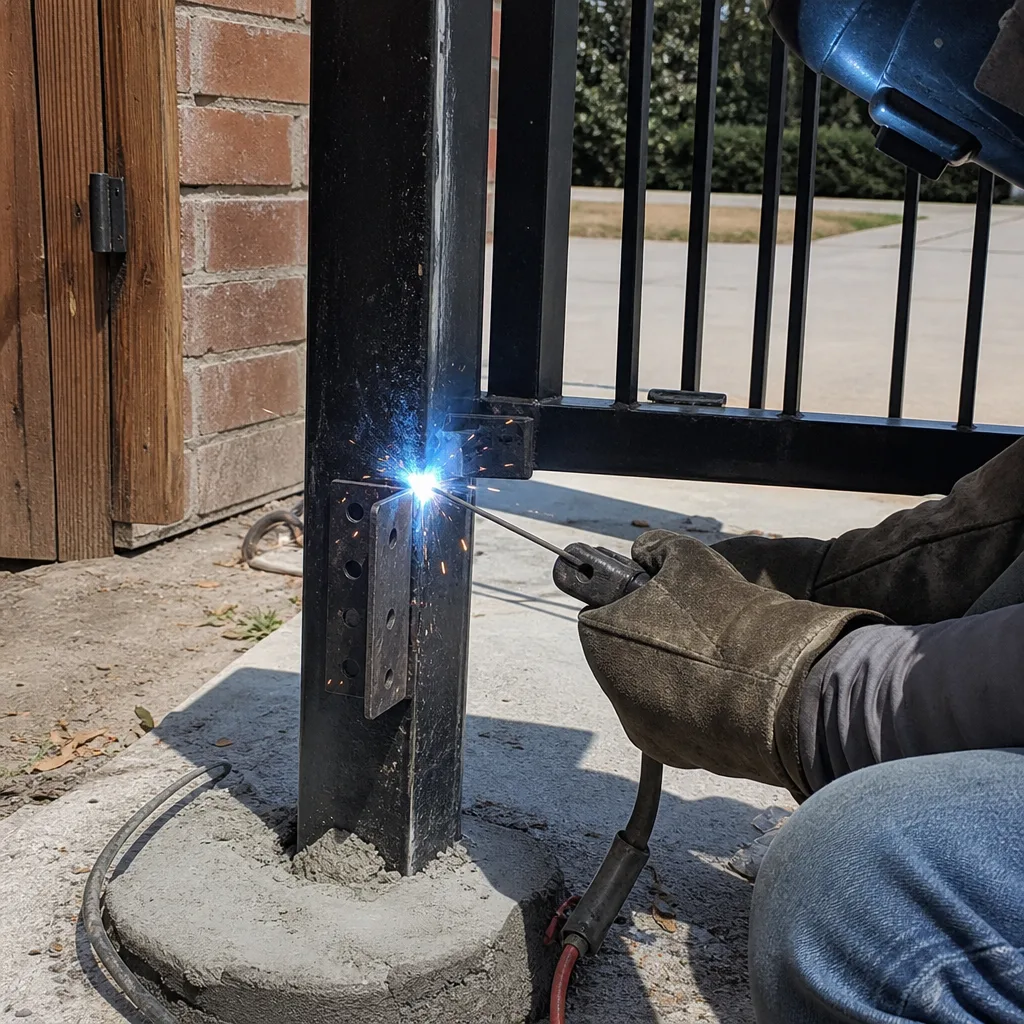
- Paying for a motor replacement without a post inspection. This is the most expensive mistake we see repeated across Frisco. If the posts have moved, a new motor will suffer the same fate as the old one, just a little later.
- Skipping the documentation. A verbal description of what was repaired is worthless six months later. If you can’t produce a photo or written record of what was changed, expect to pay a new diagnostic fee when the next symptom appears.
- Accepting a quote that makes no mention of the gate’s level. If the tech doesn’t measure the gate plane, the quote is a guess. In Frisco’s expansive soil, measuring the gate plane is the minimum viable diagnosis, not an extra step.
- Patching a symptom repeatedly instead of correcting the root cause. Each visit has a cost. Three visit costs often exceed the price of the root-cause fix the first time around. It’s the most common self-inflicted overpayment in the trade.
- Not asking what the torque specs were. Undertorqued hardware is one of our three root causes. If a hinge was touched and no torque number was recorded, the same bolt will loosen again on schedule, because the forces on a moving gate are relentless.
- Choosing a gate company based on how fast they answer rather than what they document. Speed matters, but not more than the record. In a market like Frisco, where soil movement means no fix is ever truly “set and forget,” the documentation is what protects your money.
When to Call a Professional
Call a gate professional if the gate is binding, grinding, reversing mid-cycle, or no longer holding its position. If the gate is stuck open and you cannot secure the property, call immediately. If the gate is stuck shut and you cannot get the car out, that is the top-priority scenario. If you hear a motor running but the gate isn’t moving, you likely have a decoupled chain or stripped gear, and further operation can worsen it. If the gate looks visibly tilted in the opening, the post has almost certainly moved, and no electronic repair will hold until the post is addressed. And if this is the second time the same problem has come back within a year, stop paying for repeat visits. Vance Gate Repair Frisco offers free estimates in Frisco, with a written price before any work starts. Call (940) 290-7996 and a person answers.
Frequently Asked Questions
Most gate repairs in Frisco cost between $180 and $1,400, with simple fixes like photo-eye realignment starting around $110 and full motor replacements on swing gates running from $650 to $1,400 depending on brand and whether the arm bracket is still intact. The exact price depends on the root cause, not just the symptom, which is why we deliver a written price before any work starts, never an estimate after the fact. Call (940) 290-7996 for a free in-person quote.
For mechanical issues like limit switch drift, photo-eye misalignment, and hinge retorquing, we can usually get your gate functioning the same day. If the repair requires a new control board for a LiftMaster or FAAC operator, or a post reset that involves concrete work, that’s a staged repair with parts lead time or cure time. If the gate is unsafe or blocking access, we send a technician the same day to make it secure and manually operable. Call (940) 290-7996 any hour, a person answers, not a line.
We service nine major gate automation brands including LiftMaster, FAAC, BFT, Mighty Mule, and Ghost Controls, which means we can usually work on whatever motor is already on the property. We don’t steer you toward a replacement when a repair is what the gate needs. The gate motor and opener expertise covers swing, slide, and barrier operators in the Frisco area.
It should include the diagnosis with measurements, brand and part number for any parts, labor broken out from parts, what’s explicitly excluded, and how the repair will be verified before the technician leaves. If a scope omits your cost for haul-away, rewiring, concrete patch, or reprogramming, those items become surprises later. At Vance Gate Repair, the written scope is delivered before any work starts.
Look down the length of the gate from the hinge side. If the top rail has a visible curve or the gate seems to lean toward the latch by even a few degrees, the posts have likely moved. Also check the gap between the gate and the latch: if it’s wider at the top than the bottom, that’s a post shift, not a latch problem. In Frisco’s expansive clay, that’s the most common root cause of repeat gate failures. A technician can confirm with a level and a measurement, not just a glance.
We handle both. Gate installation in Frisco includes full new builds, operator retrofits on existing gates, and access control add-ons like keypads and intercoms. Every installation follows the same Haven Standard: written price before work starts, a documented photo record on every visit, and a 365-day promise that if the repair or installation is not right, we make it right at no additional charge.
The Bottom Line
Gate repair in Frisco is less about the metal and more about the ground under it and the paper trail from whoever touched it last. Foundation movement in the North Texas clay is the starting point for most diagnoses, and undertorqued hardware and underdocumented prior repairs are the two root causes that keep gate owners paying too often. If you take one thing from this guide, take this: insist on a written price before work starts and a written record when the work is done. That alone filters out most bad gate repair experiences in Frisco. Vance Gate Repair Frisco has documented more than 22,000 gate repairs and installations since 2014, with the paperwork to prove it on every one of them.
Written by Adrian Vance, Owner at Vance Gate Repair Frisco, serving Frisco since 2014.