
Last updated September 20, 2026
Free on-site gate assessment - hinges, posts, and your LiftMaster or Nice gate operator checked before anything is quoted
The assessment is free and the quote is the invoice.

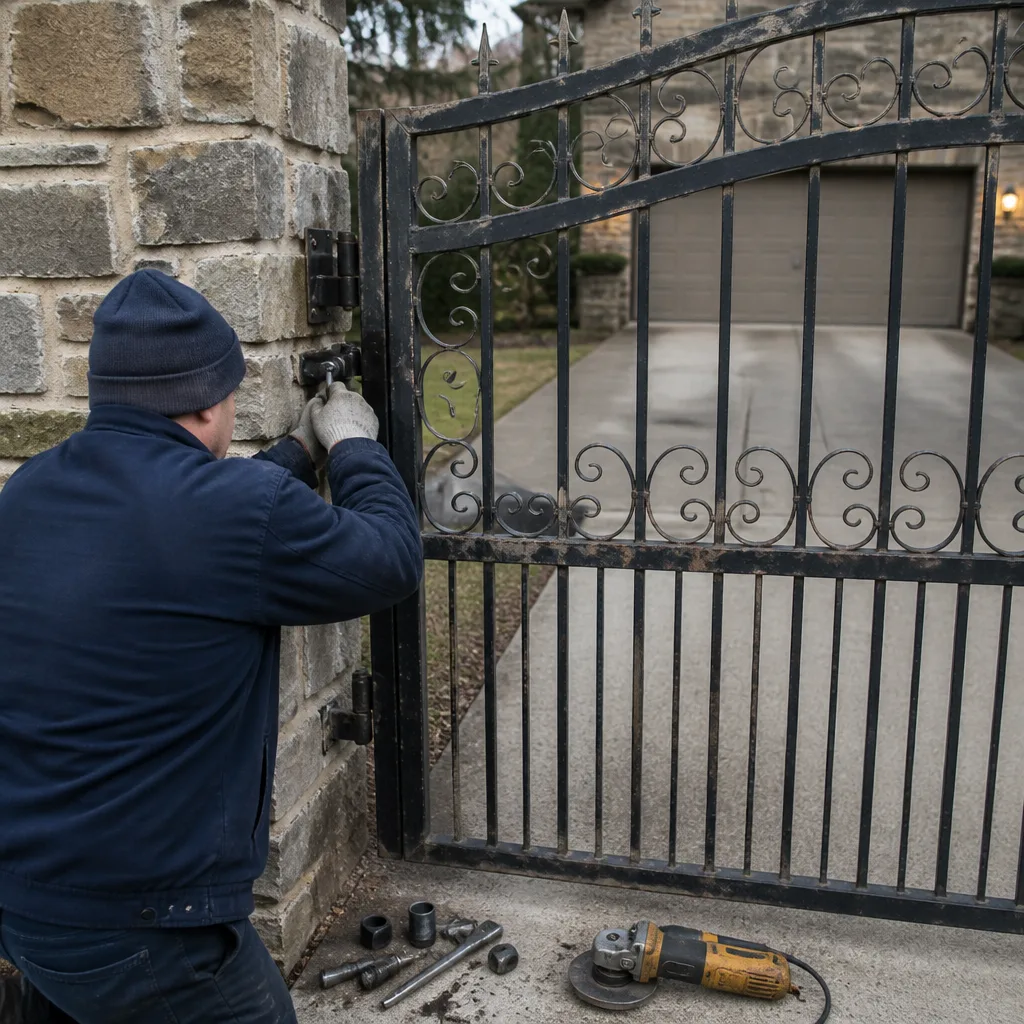 Before
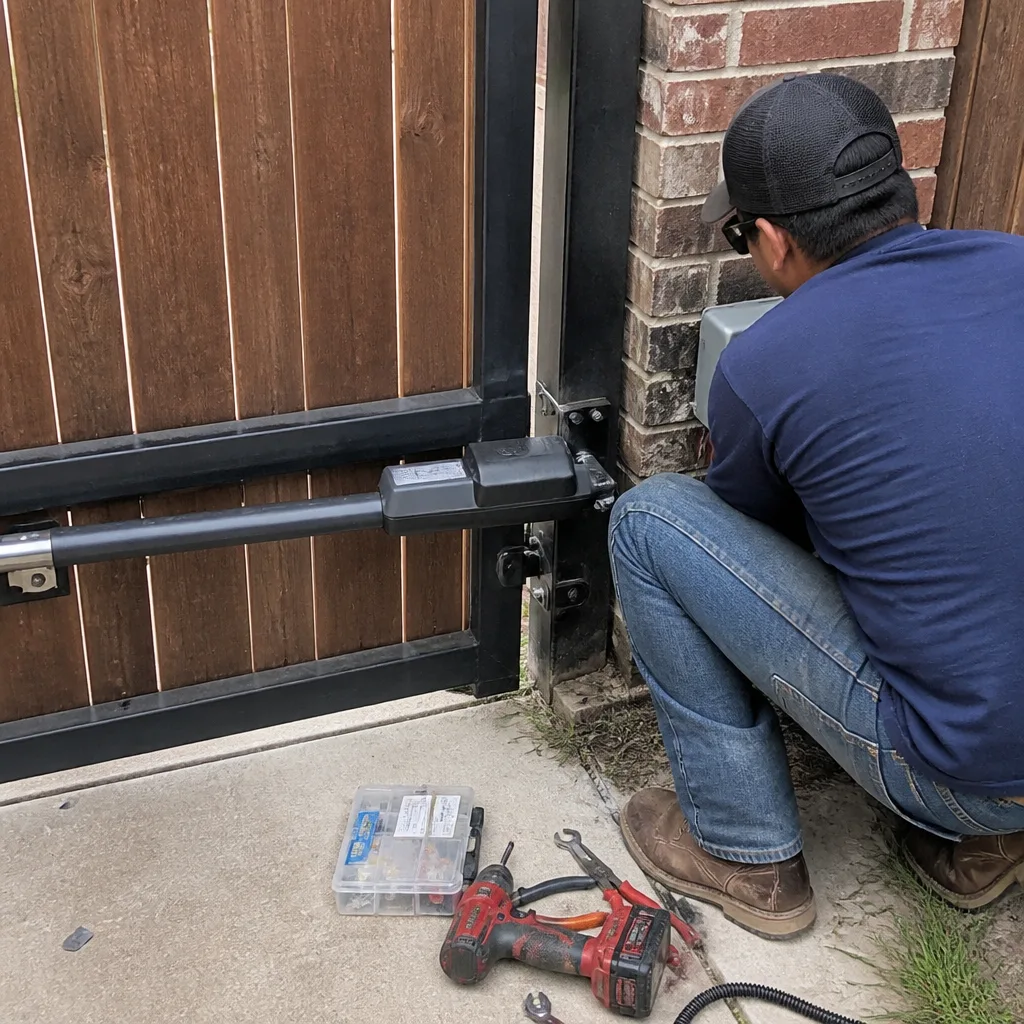 After
After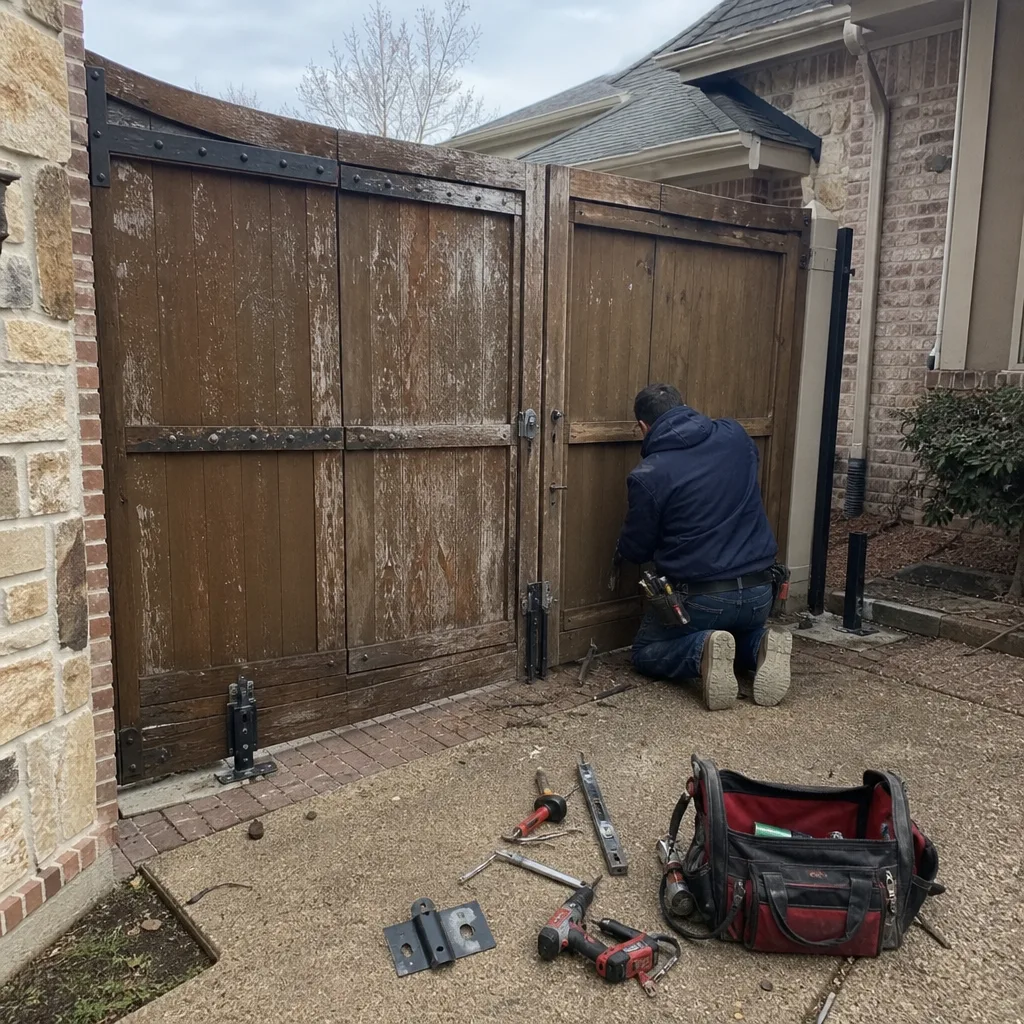 Before
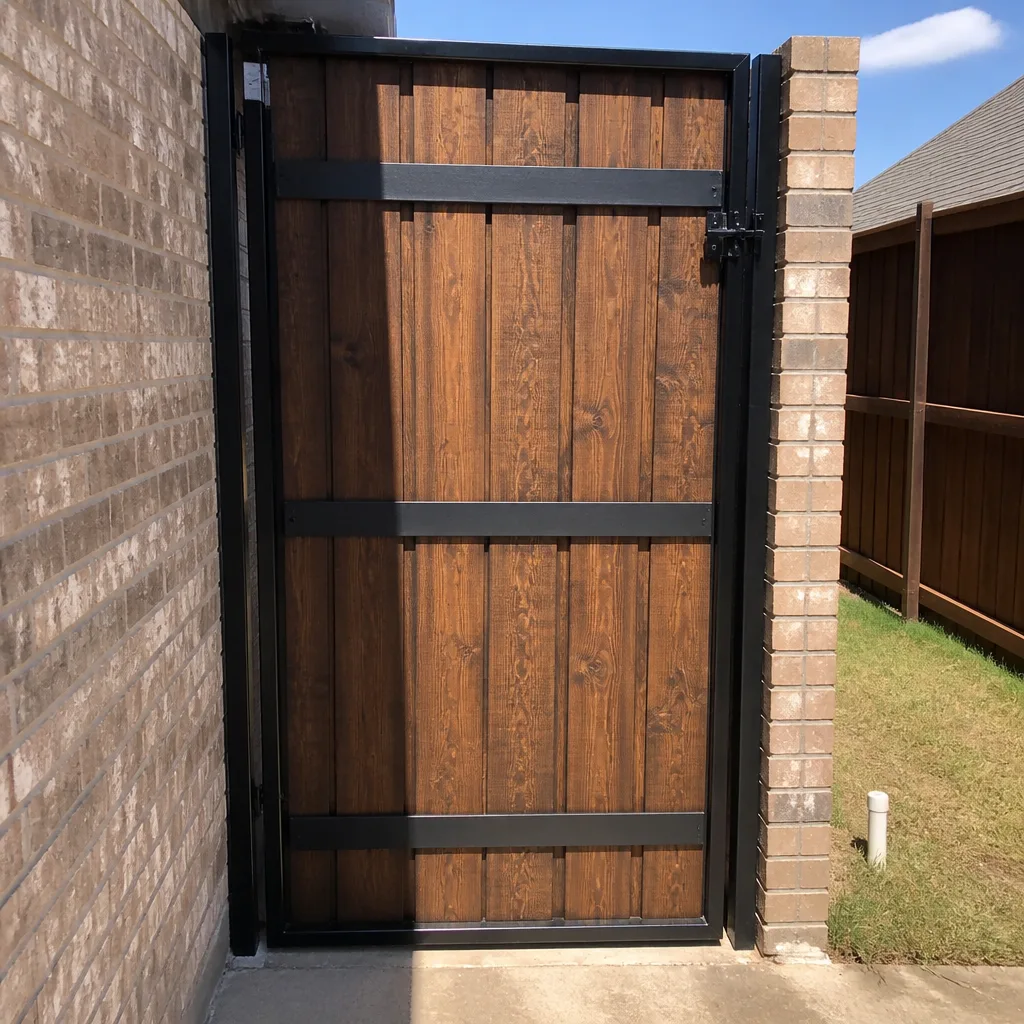 After
After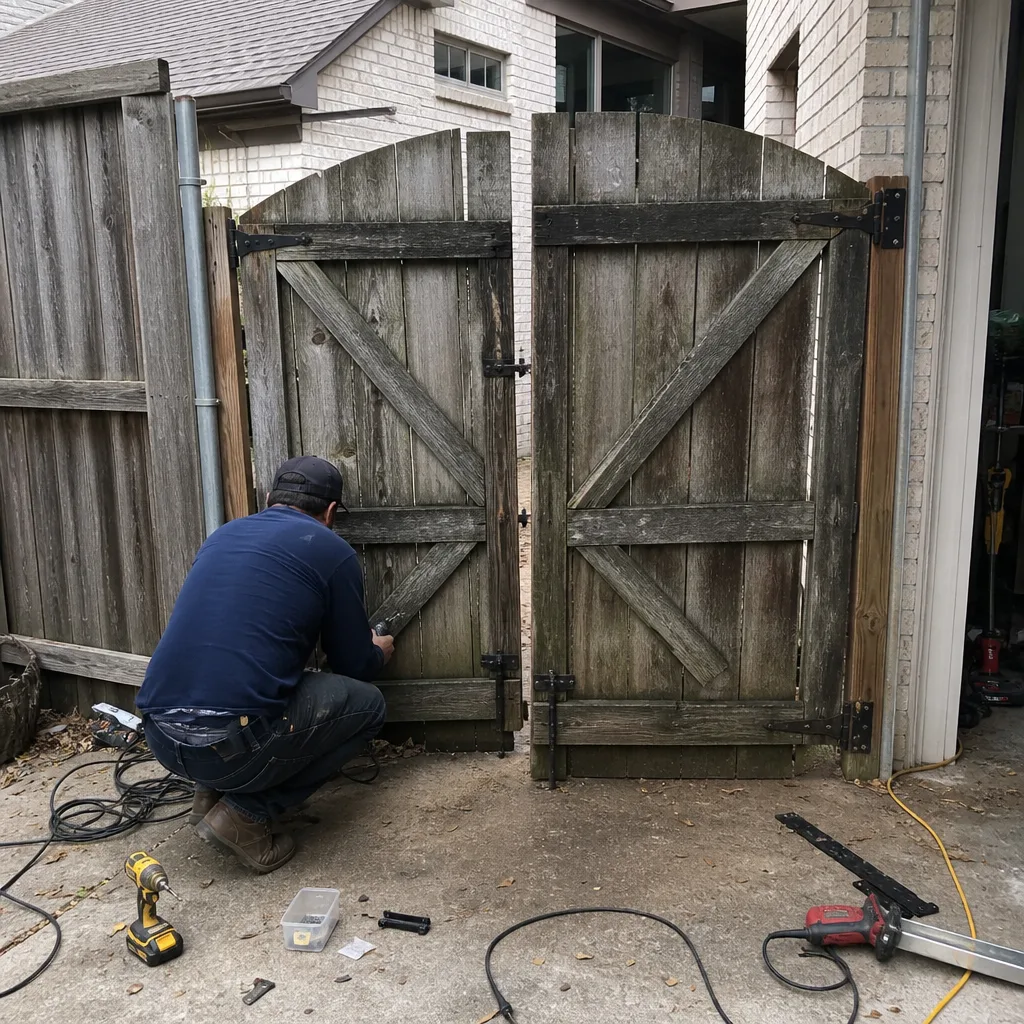 Before
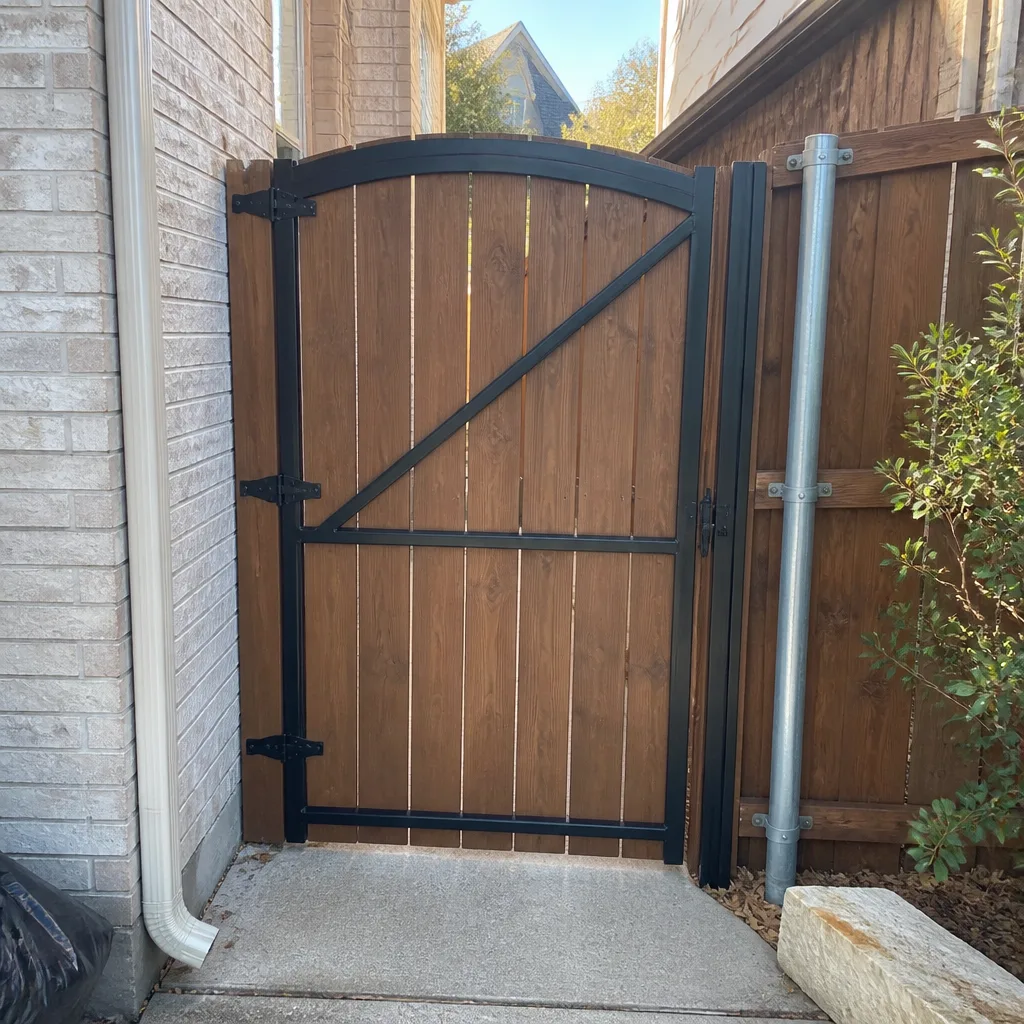 After
AfterGate Repair Warning Signs: A Frisco Homeowner’s Reference Guide
A gate that opens slowly is not the same problem as a gate that opens slowly only on the first cycle of the morning. The first is usually a mechanical issue: a worn gear, a dry bearing, a hinge that’s binding. The second is an electrical one: a capacitor that’s losing its ability to hold charge, which means the motor is starving for power on startup. The difference in repair cost between those two diagnoses is about $300. This guide gives you the diagnostic logic we use on every Frisco service call, so you can tell which warning signs are $40 problems and which ones will strand a vehicle in your driveway inside 30 days. For more detail on how we approach each job, see our Gate Repair services.
Quick Answer
The gate repair warning signs that matter most are: a change in how the gate sounds (grinding, clicking, chattering), a change in how it moves (hesitation, slowing, drifting), and a change in how it sits (sagging, leaning, gap changes at the latch). Cosmetic issues like surface rust or faded powder coat can be monitored. Structural issues like post lean or operator hesitation should be addressed within 30 days before they become complete failures. In Frisco’s expansive clay soil, gate post movement is the single most common structural problem we document, and it almost always starts with a gate that fails to latch cleanly.
Table of Contents
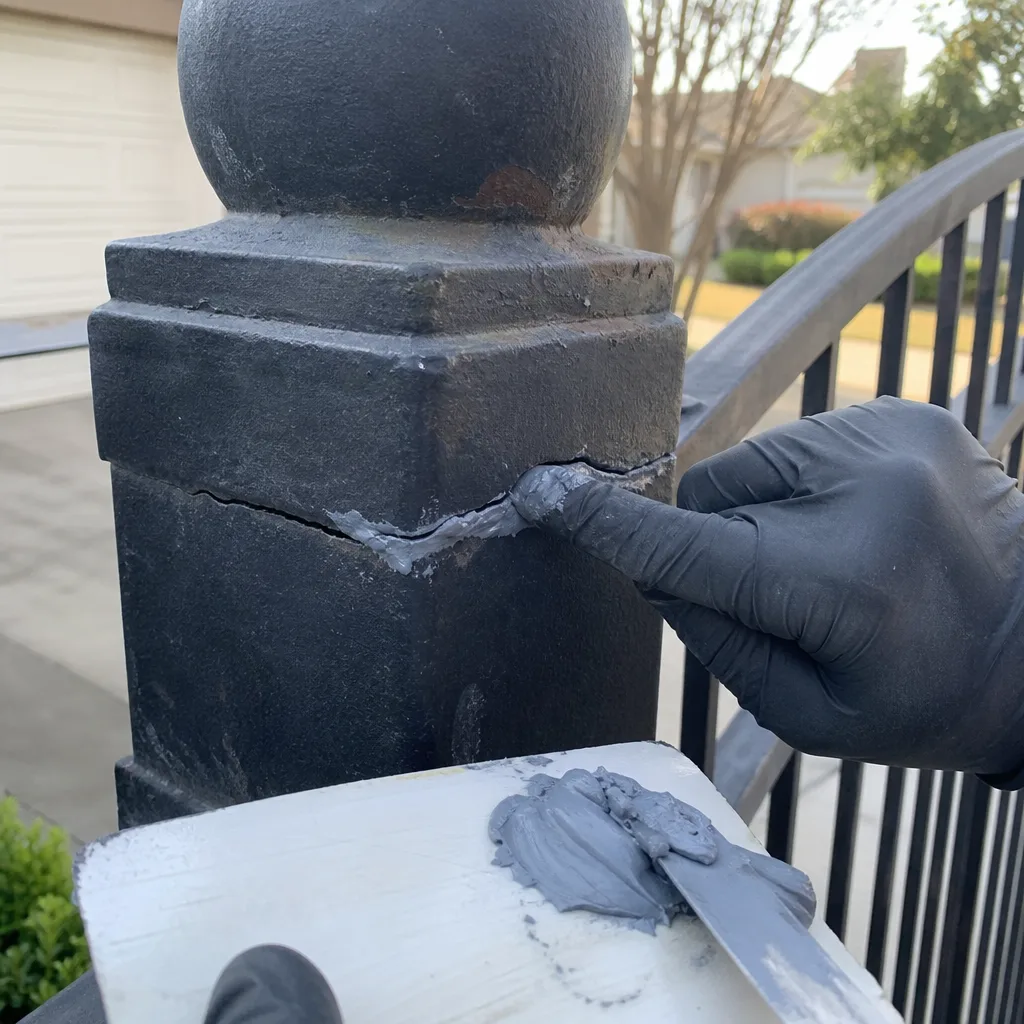
- Operator Wear Signals Versus Structural Signals: Why the Distinction Matters
- The Three Sounds That Map to Specific Components
- Why Intermittent Failures Cost More to Diagnose, and What Data to Collect
- Frisco Soil Movement: Reading Gate Posts and Hinges
- The 30-Day Failure Window: Which Signs Mean “Now” and Which Mean “This Quarter”
- A Homeowner’s 10-Minute Gate Inspection You Can Do This Weekend
- Common Mistakes to Avoid
- When to Call a Professional
- Frequently Asked Questions
- The Bottom Line
BeforeAfterOperator Wear Signals Versus Structural Signals: Why the Distinction Matters
Every gate repair falls into one of two buckets: the operator (the motor, the control board, the arms, the wiring) or the structure (the posts, the hinges, the gate frame, the ground the gate sits on). Misdiagnosing which bucket you’re in is the fastest way to pay twice for the same problem. A homeowner who replaces a chain when the real issue is a hinge that’s seized from clay-induced post movement has bought a temporary fix. The gate will fail again, because the hinge is still fighting the motor.
Here at Vance Gate Repair Frisco home, we start every diagnostic with a simple test: we disengage the operator and swing the gate by hand. If it moves freely, the problem is in the operator. If it drags, binds, or requires muscle, the problem is structural, and the motor may be a victim rather than a cause. That 60-second test tells us which repair path we’re on before we touch a tool.
Operator wear signals to watch for:
- Slow cycle time: The gate takes noticeably longer to open or close than it did when installed. If it’s a gradual change over months, it’s usually a worn gear or a tired motor. If it’s sudden, suspect a control board issue or a failing capacitor.
- Hesitation on start: You press the remote, and there’s a beat before anything moves. That pause is often a capacitor losing charge, especially if it’s worse on cold mornings or the first cycle of the day.
- Reversing mid-cycle: The gate starts, stops, and reverses without an obstacle present. This usually points to a misaligned photo-eye or a limit switch that’s drifted out of position.
- Motor runs but gate doesn’t move: The operator hums or whines but the gate stays put. That’s a disconnected chain, a stripped gear, or a broken drive belt, depending on the system.
Structural signals to watch for:
- Sagging at the latch end: The gate leaf drops toward the free end, making the latch misalign or the gate drag on the ground. This is almost always hinge wear, post movement, or both.
- Lateral drift: The gate shifts sideways over time, changing the gap at the hinge and the latch. In Frisco, this typically means one post is moving independently of the other because the soil beneath them is expanding or contracting at different rates.
- Binding at a specific point: The gate moves freely for most of its travel but hits a hard spot at a particular angle. That’s a bent hinge, a warped frame member, or a post that has rotated.
- Chain or belt slack that changes weekly: If you can tighten the chain and it’s loose again in a week, the driven post is moving. No chain adjustment will fix that permanently.
The cost difference matters. A gear replacement on a typical swing-gate operator runs $180 to $320. A post that needs to be excavated, re-set, and re-concreted in Frisco clay costs $600 to $1,400 depending on depth and access. Knowing which bucket you’re in before you agree to any work is the entire point of a written diagnosis, which is what we leave behind on every gate repair in Frisco visit.
The Three Sounds That Map to Specific Components
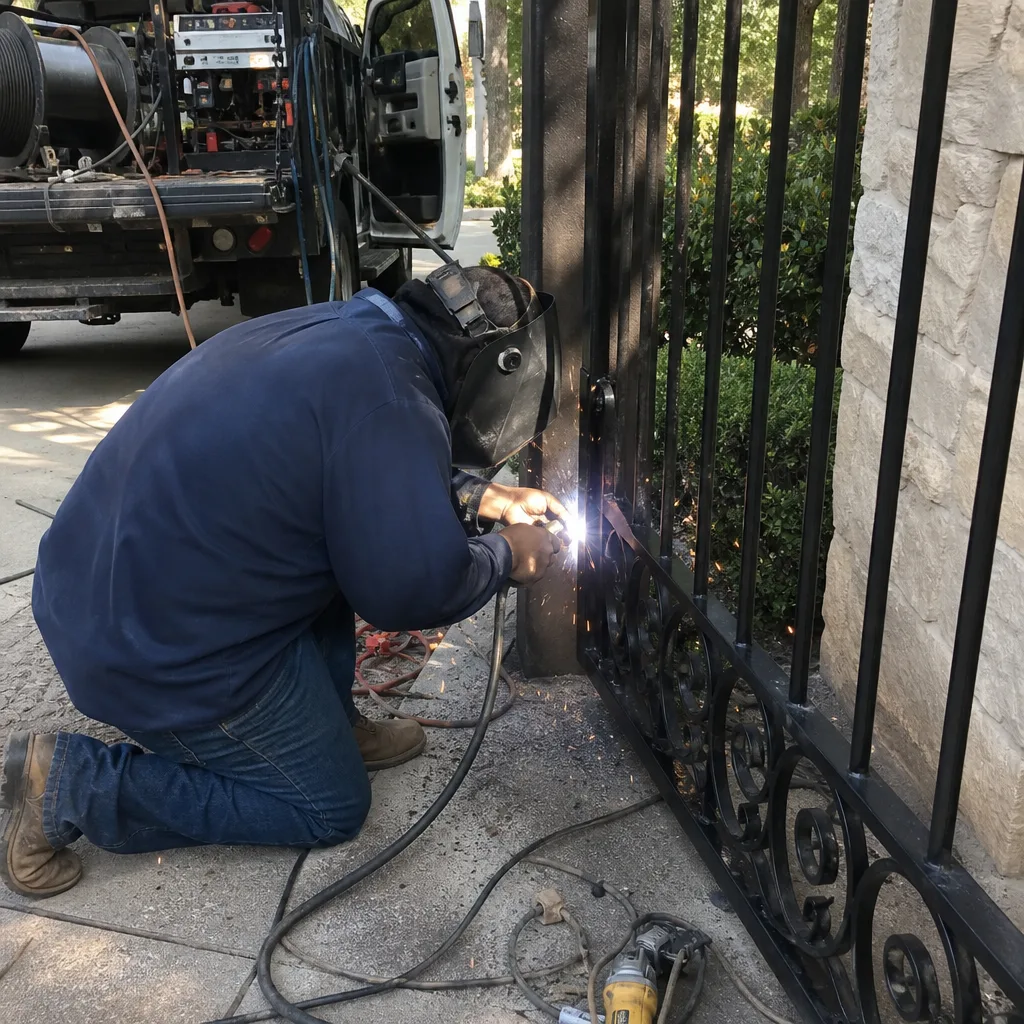
Most homeowners describe gate sounds in emotional terms: “it makes a horrible racket.” That’s fine for communicating with a spouse. It’s useless for communicating with a technician. The three sounds that actually matter are grinding, clicking, and chattering. Each one maps to a specific component, and each has a different consequence if ignored.
Grinding: metal-on-metal contact under load
A grinding sound is continuous. It happens while the gate is in motion, and it has a rough, scraping quality. The most common cause on a swing gate is a hinge with no lubrication left, often because the original grease washed out during Frisco’s heavy spring rains and was never replaced. The hinge pin and the bushing are now riding on bare metal. Left alone, the hinge wears egg-shaped, the gate drops, and the repair escalates from a $40 service call to a $400 hinge replacement or a post reset.
On a slide gate, grinding usually comes from the rollers. Slide gates ride on steel wheels in a track, and those wheels have bearings that fail. When the bearing seizes, the wheel stops rolling and starts sliding, which grinds flat spots into the wheel and grooves into the track. A $60 roller replacement becomes a $900 track repair faster than most homeowners expect.
Clicking: a relay, a limit switch, or a chain skip
A click is short and sharp. It happens once, or a few times in quick succession. If you hear a single click when you press the remote and the gate does nothing, that’s usually a relay on the control board firing but the motor failing to energize. On LiftMaster and DoorKing operators, that’s typically a bad motor capacitor or a failed start relay. On Mighty Mule systems, it’s often the control board itself.
If the clicking happens while the gate is moving, especially on a chain-driven slide gate, suspect a skipped chain link. The chain is loose enough that the drive sprocket jumps a tooth under load. That click is the sound of the chain dropping back into place. It happens more on cold mornings when the chain contracts, and it’s telling you the chain tensioner has failed or the gate’s frame has shifted slightly out of square.
Chattering: rapid-fire noise that shouldn’t be there
Chattering is what a solenoid sounds like when it’s firing repeatedly. It’s the noise a motor makes when it’s getting power, losing power, getting power again, in quick succession. On gate operators, chattering usually means a loose wire connection somewhere in the low-voltage control circuit. The motor is receiving intermittent signal, and it’s stuttering as a result. It can also be a failing relay that can’t hold its contact closed.
Chattering is the warning sign we see most often on operator brands that use plug-in control board connectors. The connection loosens over time from vibration, and the board starts misbehaving. It’s a $120 fix if caught early. If ignored, the arcing at the loose connection cooks the connector pins, and the repair becomes a $300 to $500 control board replacement. Elite and LiftMaster operators are both prone to this when the board mounting screws back out slightly, which happens more in gates that cycle frequently.
Why Intermittent Failures Cost More to Diagnose, and What Data to Collect
A gate that fails every single time is easy to diagnose. Whatever is broken is broken right now, in front of the technician. A gate that fails once every three weeks is a different animal. The technician arrives, the gate works, the problem hides, and everyone’s time gets wasted. Intermittent failures are the biggest source of repeat service calls in this trade, and they’re more common in Frisco than most homeowners realize because our temperature swings are wide enough to expose marginal connections.
Intermittent problems are usually one of three things: a loose connection, a component that’s failing only under specific temperature or load conditions, or a control board with a cracked solder joint. None of these show up on a bench test. They show up at 6:47 a.m. when the gate is cold, or at 5:30 p.m. when the sun has been baking the control box all afternoon.
Data to collect between service visits:
- Time of day the failure happened. This is the single most useful piece of information. Cold-morning failures point to capacitors, solder joints, and contracted chains. Hot-afternoon failures point to overheating boards and expanding metal components.
- Weather conditions. Did it rain in the 24 hours before the failure? Frisco’s clay soil swells dramatically after rain, and a gate that works fine dry and binds wet is telling you the posts are moving with moisture. That’s a structural diagnosis, not an operator one.
- What the gate did immediately before the failure. Was it mid-cycle? At the end of travel? Was it the first cycle of the day or the fiftieth? First-cycle failures are usually electrical. End-of-travel failures are usually limit switches or mechanical stops.
- What you did to clear it. Did you have to power-cycle the operator? Did it start working on its own after ten minutes? Did you have to manually push the gate? The recovery behavior tells us whether the fault is in the control board, the motor, or the drive system.
- How long it’s been happening. A problem that started last week is a different diagnosis than one that’s been getting worse for six months. Note the first time you remember it happening, even roughly.
When you call us with that data, the diagnostic time drops dramatically. We dispatch a technician who knows what they’re looking for before they arrive, and they still verify everything on site. For homeowners who’d rather us do the data gathering, we offer free estimates in Frisco, and we’ll document the gate’s current state so there’s a baseline for comparison. You can also find more guides & resources on our blog. That baseline is the only way to catch an intermittent failure before it becomes a permanent one.
Frisco Soil Movement: Reading Gate Posts and Hinges
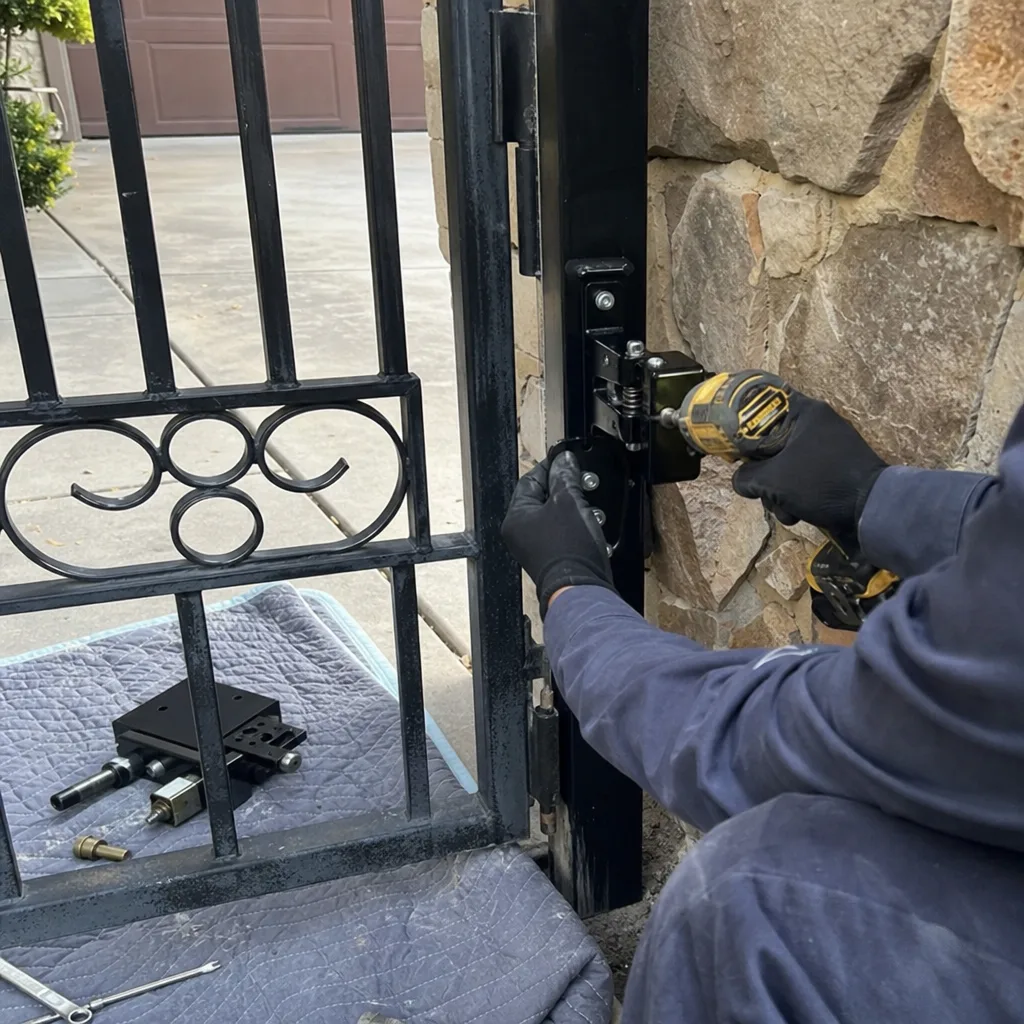
Frisco sits on expansive clay. Everyone who’s owned a home here for more than one full season knows what that means for foundations: the soil swells when wet, shrinks when dry, and the slab moves accordingly. What fewer homeowners realize is that gate posts are affected by the same forces, and they’re affected faster because gate posts are usually set shallower than foundation footings. A 36-inch-deep gate post sitting in expansive clay is a lever arm with a concrete plug at the bottom, and the soil is trying to move it every single season.
The result is a specific pattern of gate problems that we see across Frisco neighborhoods from The Trails to Phillips Creek Ranch. The gate works fine for a year or two after installation. Then the first dry summer hits, the clay shrinks, and one post tilts outward by a quarter degree. The gap at the latch changes. The hinges bind. The gate starts dragging at the latch end. By fall, the homeowner is convinced the operator is failing, when the real problem is that the gate’s geometry has shifted underneath it.
What heaved concrete looks like versus normal settlement:
- Normal settlement is uniform. The post stays plumb, but the whole concrete collar around it drops slightly. You’ll notice a hairline gap between the concrete and the surrounding soil or paving, but the post itself remains vertical. Normal settlement rarely causes gate function issues.
- Heave is differential. One side of the concrete collar sits higher than the other, and the post is leaning away from the high side. The visible crack is wider at the top than the bottom, or you’ll see the concrete has separated from the post on one side only. Heave is what kills gate function because it changes the hinge geometry.
- Rotational movement shows up as a post that’s plumb in one direction but twisted in another. The hinge side looks fine, but the gate leaf has shifted laterally, and the latch no longer catches. This is the classic sign of a post that was set without enough mass below the frost line or without rebar tie-in to the footing.
A check you can do in 60 seconds:
Put a level on each post, both faces. If it reads plumb in both directions, the post is fine and your gate problem is elsewhere. If it reads even slightly out, take a photo. That photo is your baseline. Six months later, put the level on the same post again. If the bubble has moved at all, the soil is actively working that post, and you have a structural issue that no amount of operator adjustment will solve. In our experience at gate installation in Frisco, the fix for a moving post is almost always excavation and re-setting with a larger footing, not shimming and hoping.
The 30-Day Failure Window: Which Signs Mean “Now” and Which Mean “This Quarter”
A gate rarely dies without warning. It telegraphs what’s coming, but the message looks different depending on what’s actually failing. Some warning signs mean you have a month or less before the gate stops working entirely. Others can be safely monitored for a quarter. The trick is knowing which is which, because the cost of getting it wrong is a gate stuck open at 7 p.m. with a car trapped on the other side.
Signs that point to a sub-30-day failure:
- Hesitation that’s getting worse by the week. If the pause between pressing the remote and the gate moving was one second last month and three seconds this month, the capacitor is fading on a curve. When it fails completely, the motor won’t start at all.
- A grinding sound that’s changing pitch. A hinge or roller that’s grinding is actively wearing metal. The pitch change tells you the wear surface is getting smaller, which accelerates the wear rate. It’s a feedback loop.
- The gate reverses for no reason, more than once per day. An intermittent photo-eye fault that’s getting more frequent will eventually refuse the close command entirely, leaving the gate open
- Chain or belt slack that appeared suddenly. A chain that went from tight to visibly sagging in a week didn’t stretch. The post moved, or the tensioner broke. Either way, a chain that loose can skip and drop the gate off its track.
- Burnt smell from the control box. This one is obvious, but we list it because homeowners ignore it. A component that smells burnt has already failed electrically. The gate may still work because the component is limping, but it will not limp for long.
Signs that can be monitored quarterly:
- Surface rust on the gate frame. In Frisco’s humidity, surface rust is cosmetic for a long time before it becomes structural. Monitor it. When the rust pitting gets deep enough to catch a fingernail, it’s time to treat and repaint.
- Minor sag at the latch end, less than half an inch. A half-inch sag that’s stable isn’t urgent. It’s hinge wear that can be addressed at the next service. But measure it, and re-measure in three months. If it’s growing, it moves to the urgent column.
- Slow cycle time that’s been stable for months. If the gate has been opening at the same slow speed for a year, it’s not an emergency. It’s a worn gear that’s reached a stable operating condition. It should still be addressed, but it’s a scheduling priority, not a panic call.
- Sparse clicking from the control board on occasion. A single click that’s occasional and resolves on its own is usually a relay that’s starting to stick. It’s worth documenting, but it’s not a failure yet.
The point is that urgency is a function of rate of change, not the symptom itself. A gate that’s been grinding for two years is less urgent than a gate that’s been grinding for two weeks and getting louder. That’s why we document everything on every service visit: the baseline matters more than the snapshot. If you’ve had gate motor and opener work in Frisco done before, we can compare the current condition to the last record and tell you exactly how fast things are moving.
A Homeowner’s 10-Minute Gate Inspection You Can Do This Weekend
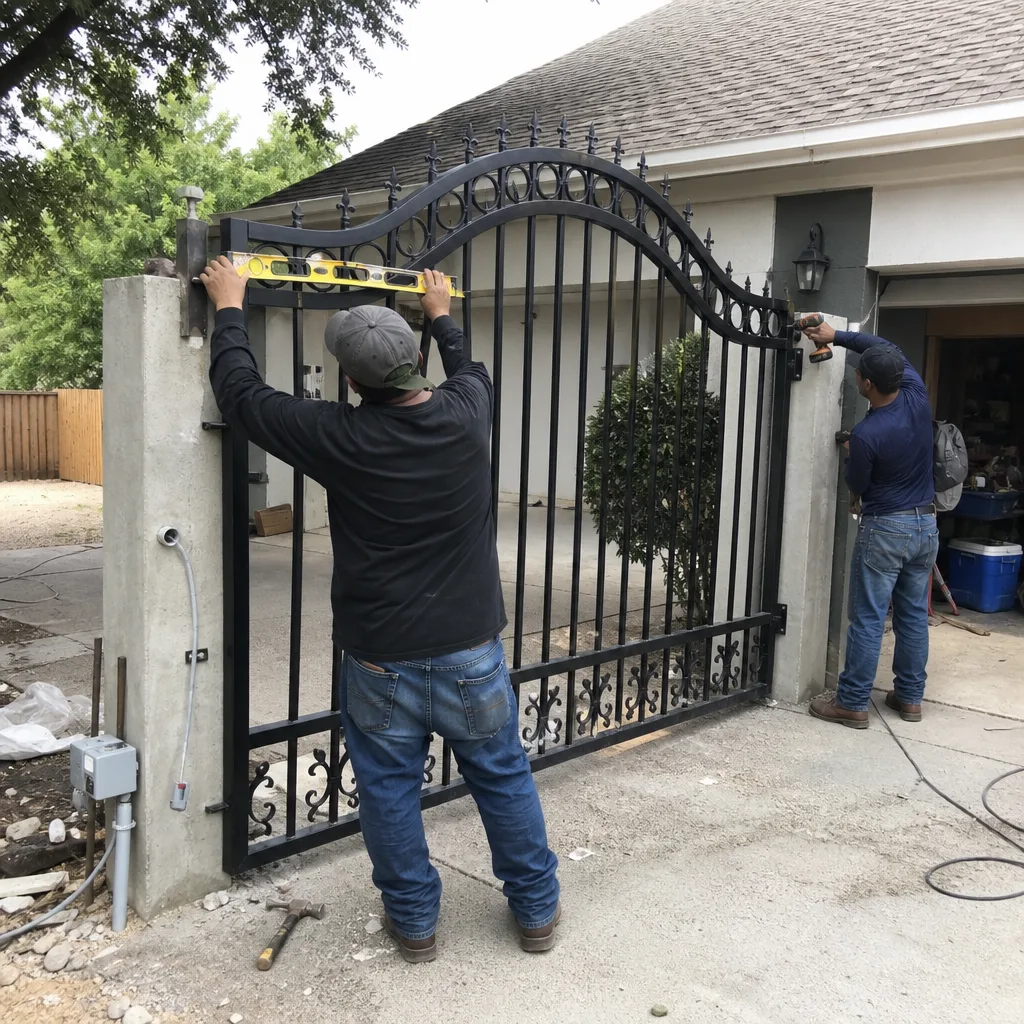
You don’t need tools for this, except maybe a level and your phone camera. The goal is to establish a baseline and catch changes early. Do this inspection twice a year, same season as you change your smoke detector batteries. Spring and fall are ideal in Frisco because the soil moisture contrast is highest then. For a full seasonal breakdown, see Seasonal Gate Repair Care for Frisco: Year-Round Homeowner’s Guide.
- Watch a full open and close cycle. Stand in one place and watch the gate travel its entire path. Note where the gate is at its fastest and where it slows. Note the sound. Note any hesitation at the start. Do this once in the morning and once in the evening if you can, because temperature changes behavior.
- Disengage the operator and swing the gate by hand. On most operators, there’s a manual release handle or key. Release it, then push the gate through its full travel. It should move smoothly with one hand. If it binds anywhere, that’s a mechanical or structural issue, and you’ve just isolated it from the motor.
- Put a level on each post, both faces. Photograph the bubble. This is your baseline. If the post is out of plumb, note which way it leans and take a wider photo so you can see the context.
- Check the hinges for visible wear. Look for metal dust around the hinge pins, which indicates the grease has failed and the pin is wearing. Look for a gap at the top hinge that’s wider than the bottom hinge, which indicates the gate is dropping.
- Check the gate-to-ground clearance at three points: hinge, middle, latch. The gap should be roughly equal at all three points, adjusted for grade. If the latch-end gap is tighter than the hinge-end gap, the gate is sagging.
- Test the safety devices. If your gate has photo-eyes, block the beam with your hand while the gate is closing. The gate should stop and reverse. If it doesn’t, that’s an immediate safety concern, and it’s the one issue on this list that should be addressed without waiting for the next scheduled service.
- Photograph everything. All of it. The hinge closeups, the post levels, the gate gaps, the control board with the cover off if you’re comfortable removing it. Date-stamp the photos. Six months later, you’ll have a comparison set that will tell you whether anything is moving.
That’s the whole inspection. Ten minutes, twice a year, phone camera, level from the garage. It’s not a substitute for a professional service visit, but it’s how you know when to schedule one. When we come out for a Frisco gate repair, we do the same inspection with calibrated tools and document it the same way, so you and we both have a record.
Common Mistakes to Avoid
- Treating the operator as the likely culprit by default. When a gate stops working, most homeowners assume the motor. In our documented service records, a large share of “dead motor” calls are actually dead hinges, moved posts, or failed photo-eyes. Disengage the operator and swing the gate by hand before you assume the worst. It’s the diagnostic shortcut that prevents paying for a motor you didn’t need.
- Adjusting the limit switches repeatedly without finding the cause. If the gate keeps drifting past its limit, something is moving: the post, the mount, the chain. Re-setting the limit is a band-aid. In Frisco clay, repeated limit drift is usually a post that’s being worked loose by seasonal moisture. Find the movement, don’t chase the limit.
- Replacing the remote batteries as the first step for every problem. New batteries fix a dead remote and nothing else. If the remote’s LED lights up but the gate doesn’t respond, the problem is not the batteries. Wasting a service call on a battery replacement is the most common avoidable expense in this trade.
- Ignoring a grinding noise because the gate “still works.” The gate will keep working until the hinge or roller fails completely, and that failure usually happens when the gate is in motion with a vehicle in the path. The repair cost for a seized roller is four to eight times the cost of replacing it before it fails.
- Greasing a chain or track as a repair. Lubricating a chain that’s already stretched or a roller that’s already seized doesn’t restore it. It just makes the failure quieter for a few weeks while it continues getting worse. Lubrication is maintenance, not repair.
- Waiting for a consistent failure before calling anyone. Intermittent problems are diagnosed from the data you collect while the problem is happening. By the time the failure becomes permanent, the damaged component has usually taken adjacent components with it. Document the intermittent symptoms as they occur, and call when you have two or three data points, not when the gate is dead.
- Patching a sagging gate with a wheel instead of fixing the hinge. The bolt-on caster wheel industry exists because so many gates sag. A wheel under the latch end of a sagging gate masks the symptom but does nothing for the hinge wear that caused the sag. The hinge keeps wearing, the wheel keeps masking, and the eventual repair is larger than it should have been.
When to Call a Professional
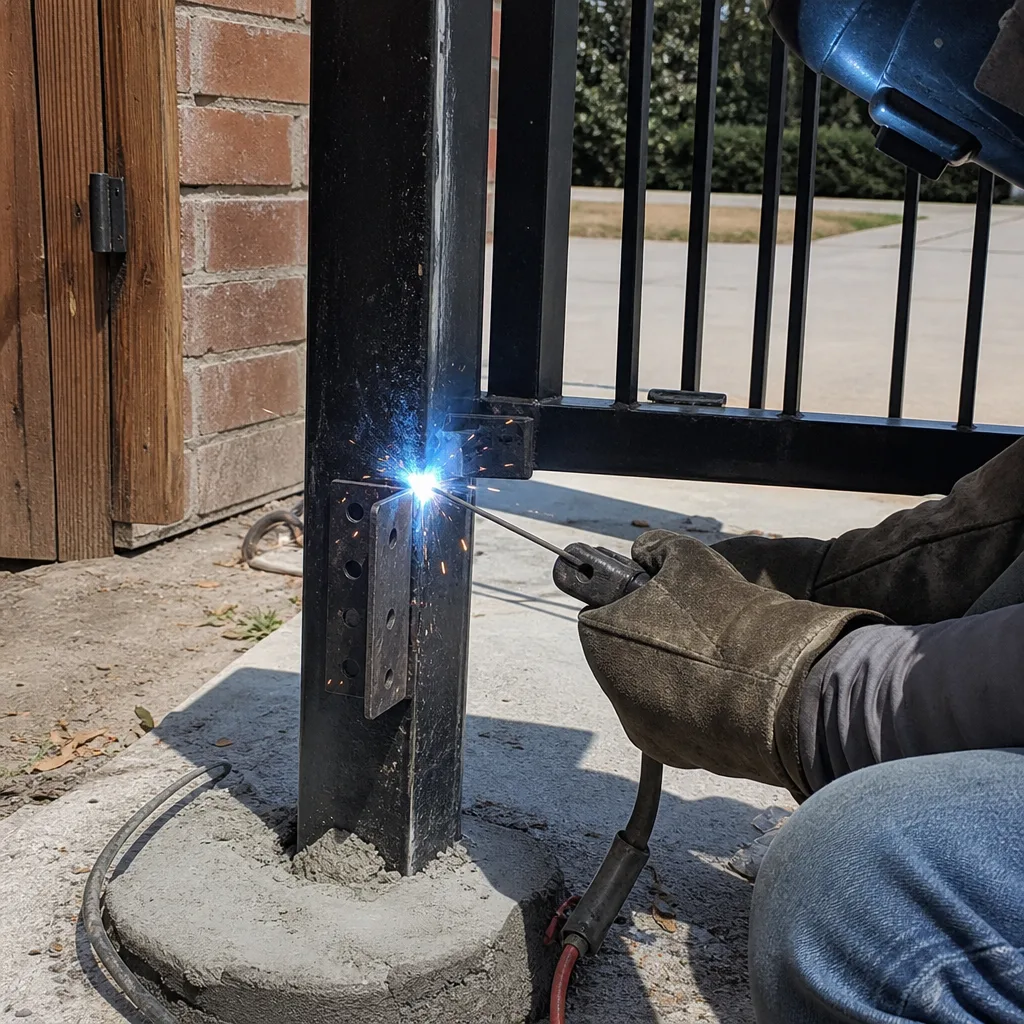
Call when you see rate-of-change warning signs: a gate that’s sagging more each month, a hesitation that’s growing, a sound that’s getting louder or changing pitch. Call when the gate reverses on its own, because that’s a safety device malfunction, and it’s the one issue that can injure someone. Call when a post is visibly out of plumb, when the chain or belt has developed sudden slack, or when you’ve documented intermittents across three or more separate occasions. And call when you want a baseline: a written record of the gate’s current condition, with photos and readings, so any future change is measurable. Vance Gate Repair Frisco offers free estimates in Frisco, with a written price before any work starts. Call (940) 290-7996 and we’ll send a technician with a name you’ll know before arrival.
Frequently Asked Questions
Most gate repairs in Frisco run between $180 and $900 depending on what’s failed. Minor fixes like photo-eye alignment or a limit switch reset run $95 to $180. Gear replacements on swing-gate operators run $180 to $320. Chain and roller replacements on slide gates run $250 to $500. Control board replacements run $300 to $650 depending on brand, with DoorKing and LiftMaster boards at the upper end. Full post resets in Frisco’s clay soil run $600 to $1,400 depending on depth and access. Every price is written and agreed before any work starts, so the number you see is the number you pay. Call (940) 290-7996 for an exact quote on your gate.
Intermittent gate failures are almost always caused by a loose connection, a temperature-sensitive component like a capacitor, or a control board with a cracked solder joint. These failures appear and disappear based on conditions: time of day, air temperature, moisture. The fix is diagnosed by collecting failure data (time, weather, what the gate did) and then testing the suspect components. An intermittent problem left alone eventually becomes a permanent one. Call (940) 290-7996 and we’ll document the symptoms and trace the cause.
Yes. A live person answers the phone 24 hours a day, seven days a week, and we dispatch technicians for same-day repairs across Frisco. Emergency calls for gates stuck open, stuck closed, or failing safety devices are prioritized. Call (940) 290-7996 and you’ll speak to a person, not a voicemail system, at any hour.
A sagging gate is a structural warning, not a cosmetic one. The sag means the hinges are wearing or a post is moving, and both conditions worsen over time. A gate that drops far enough can detach from a hinge or drag on the ground, which adds load to the motor and shortens its life. In Frisco, sagging is frequently tied to soil movement under gate posts. The fix is hinge replacement, post re-setting, or both, not a wheel bolted to the latch end.
We service nine major automation brands, including LiftMaster, DoorKing, Elite, Mighty Mule, FAAC, BFT, Linear, Viking, and Ghost Controls. A technician will diagnose and repair whatever operator is already on your property rather than steering you toward a replacement. If the operator is beyond repair, we’ll quote the replacement in writing before any work starts. Call (940) 290-7996 and mention your gate’s brand; we’ll confirm coverage.
A full inspection includes a manual cycle test with the operator disengaged, post plumb readings on both faces, hinge and roller condition documentation, safety device testing, control board and wiring inspection, and limit switch verification. Every finding is photographed. You receive a written record of what was found, what was adjusted, and what was recommended. The inspection is free as part of any estimate. Call (940) 290-7996 to schedule one in Frisco.
The Bottom Line
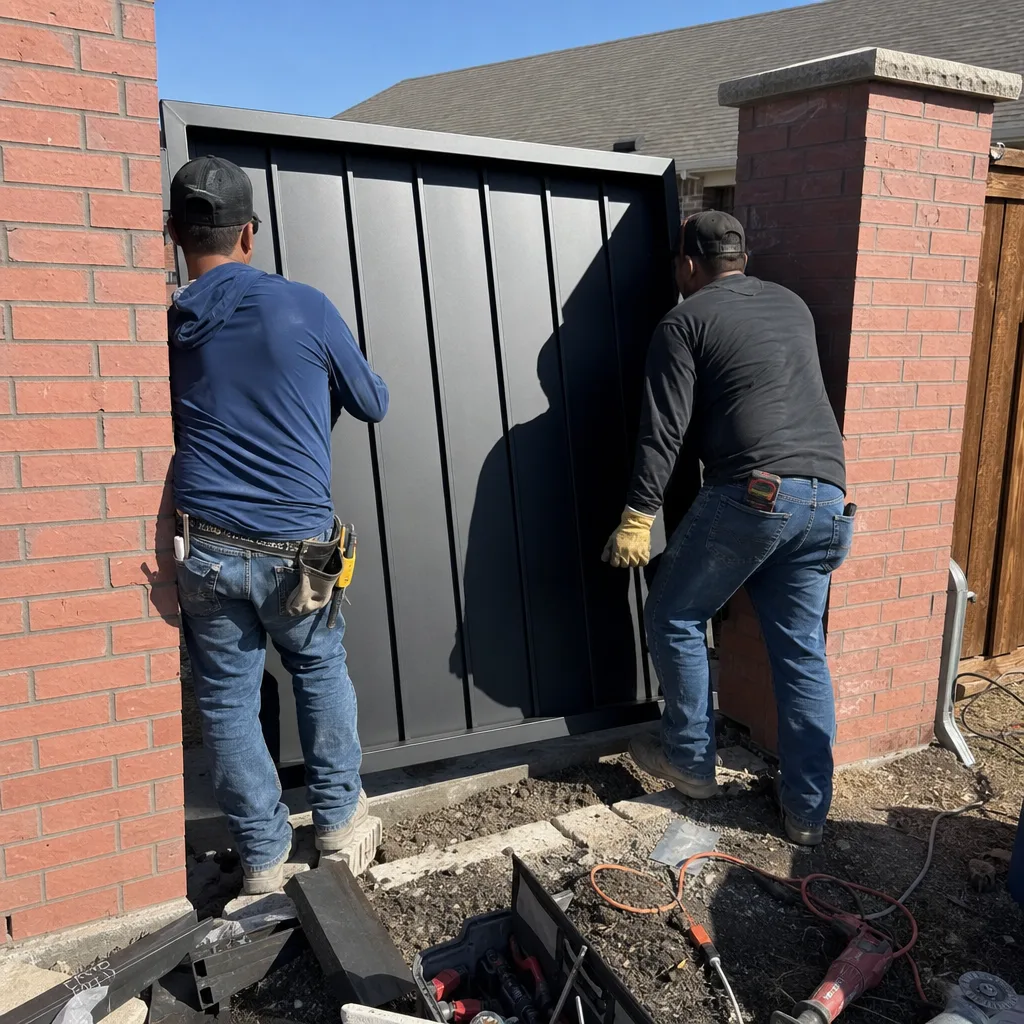
A gate’s warning signs are only useful if you can separate the cosmetic from the structural and the operator from the support. Rate of change is the metric that matters: a stable symptom can wait, an accelerating one cannot. Sound maps to component: grinding means hinges or rollers wearing, clicking means relays or chain skips, chattering means loose connections. In Frisco’s expansive clay, the soil under the posts is a variable in every diagnosis, and post movement is the silent cause behind many “motor” problems. Document what you see and hear, inspect twice a year with a level and a camera, and when the data says something’s moving fast, call someone who’ll put the price in writing before the work begins.
Written by Adrian Vance, Owner at Vance Gate Repair Frisco, serving Frisco since 2014.