
Last updated September 20, 2026
Free on-site gate assessment - hinges, posts, and your LiftMaster or Nice gate operator checked before anything is quoted
The assessment is free and the quote is the invoice.


 Before
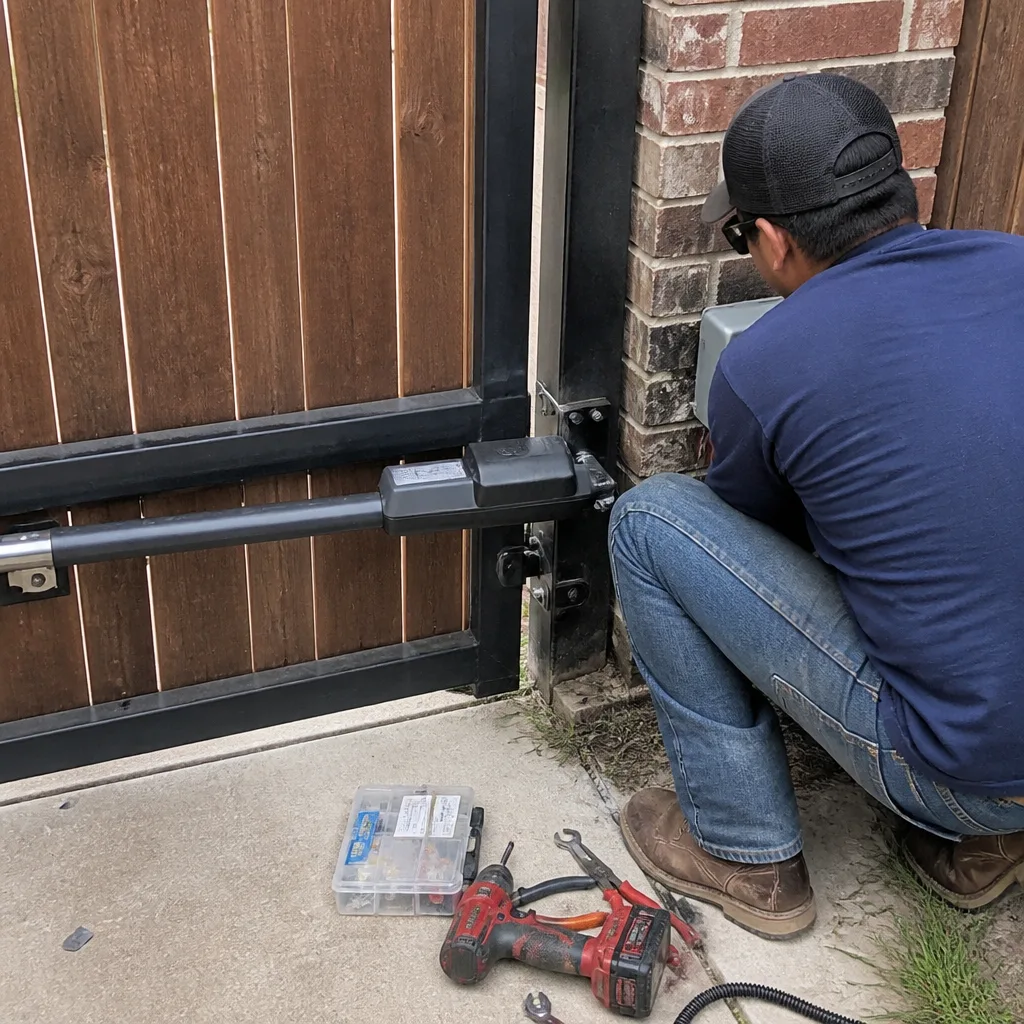 After
After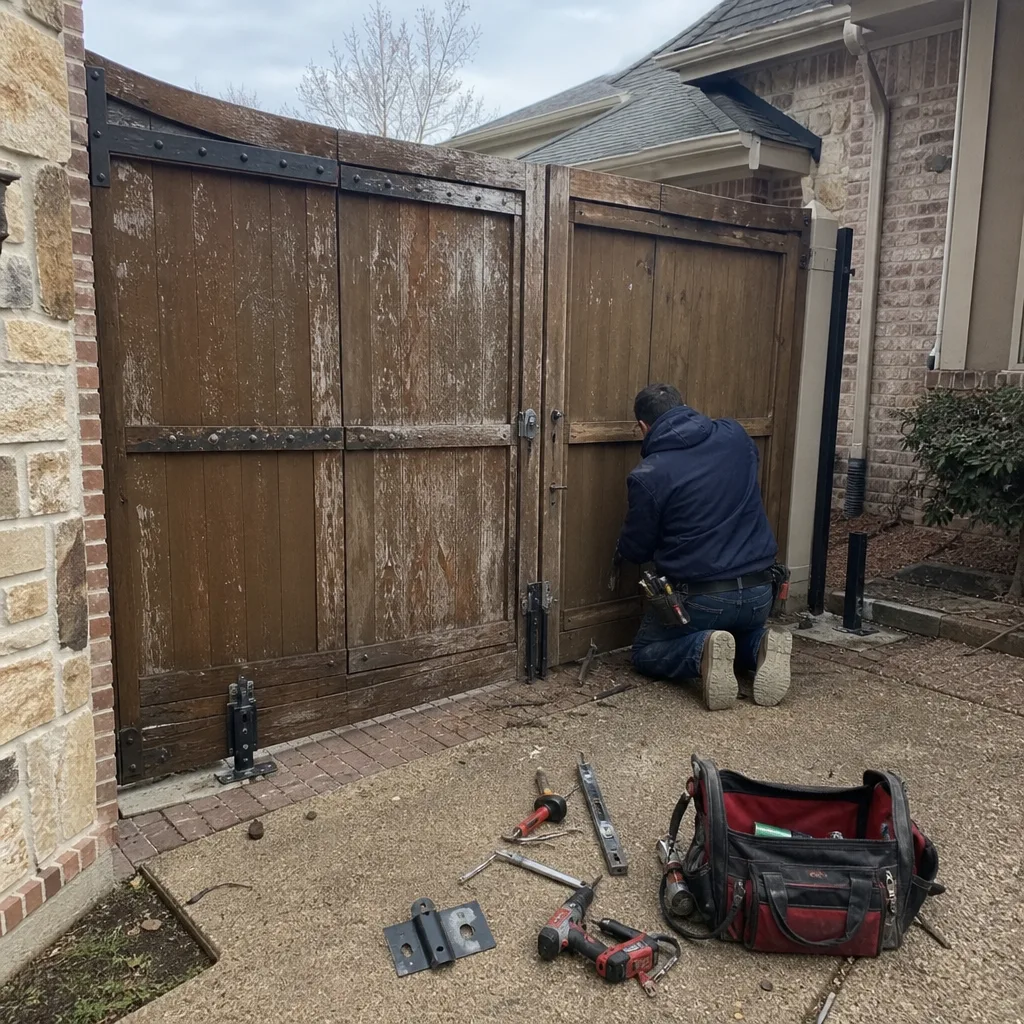 Before
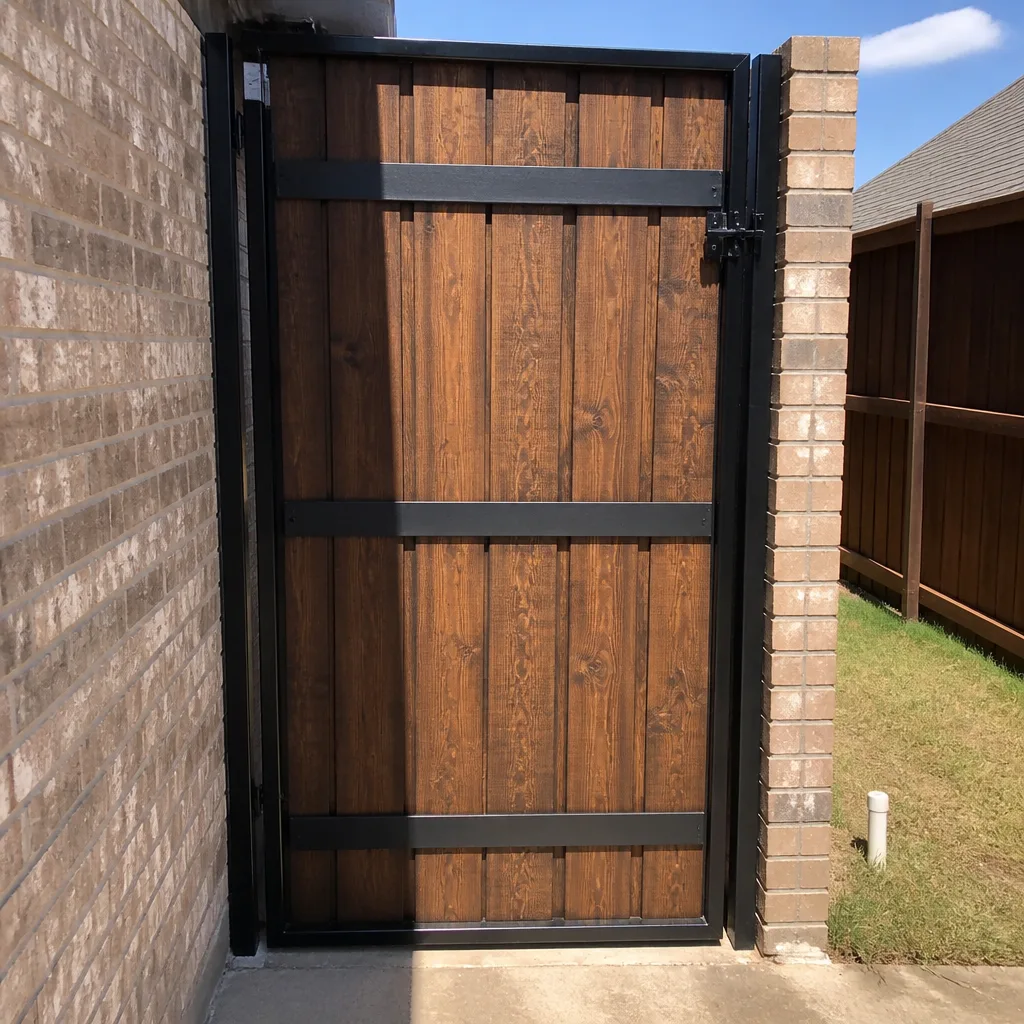 After
After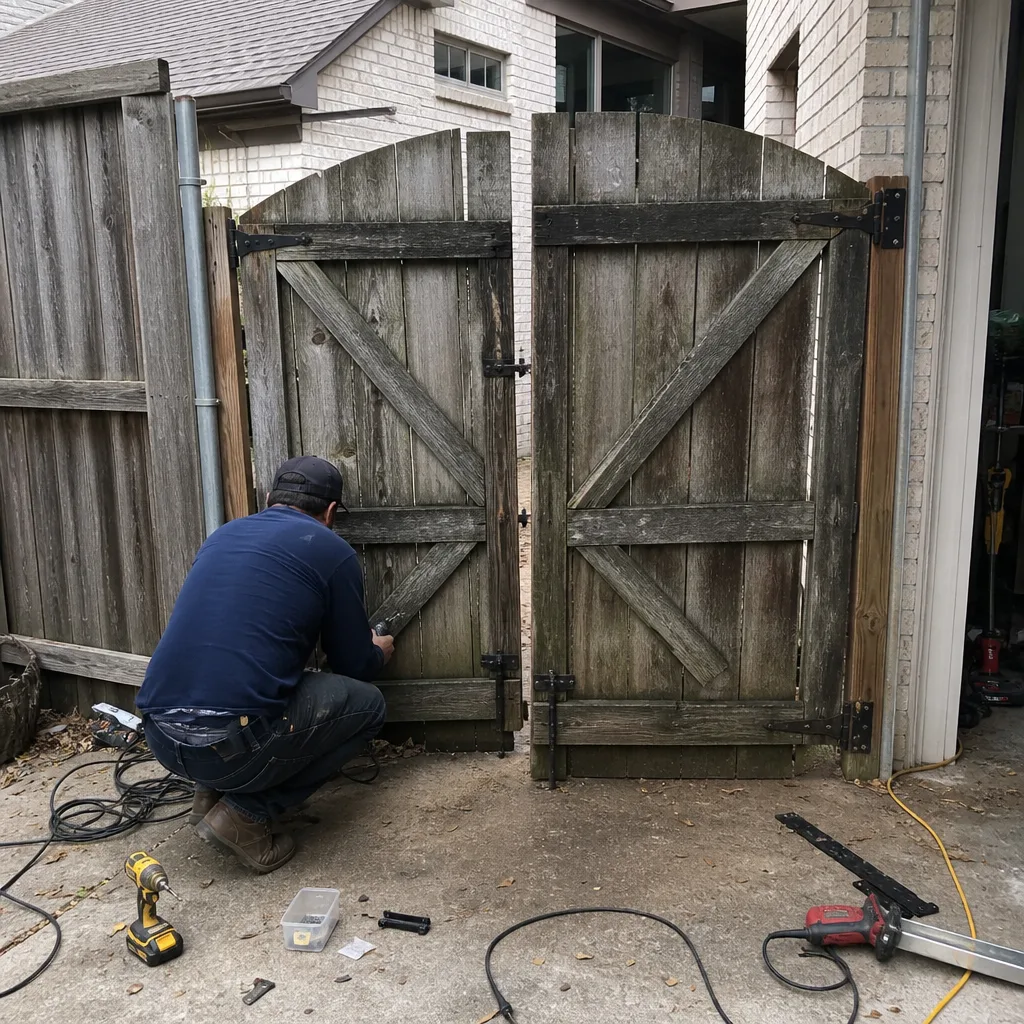 Before
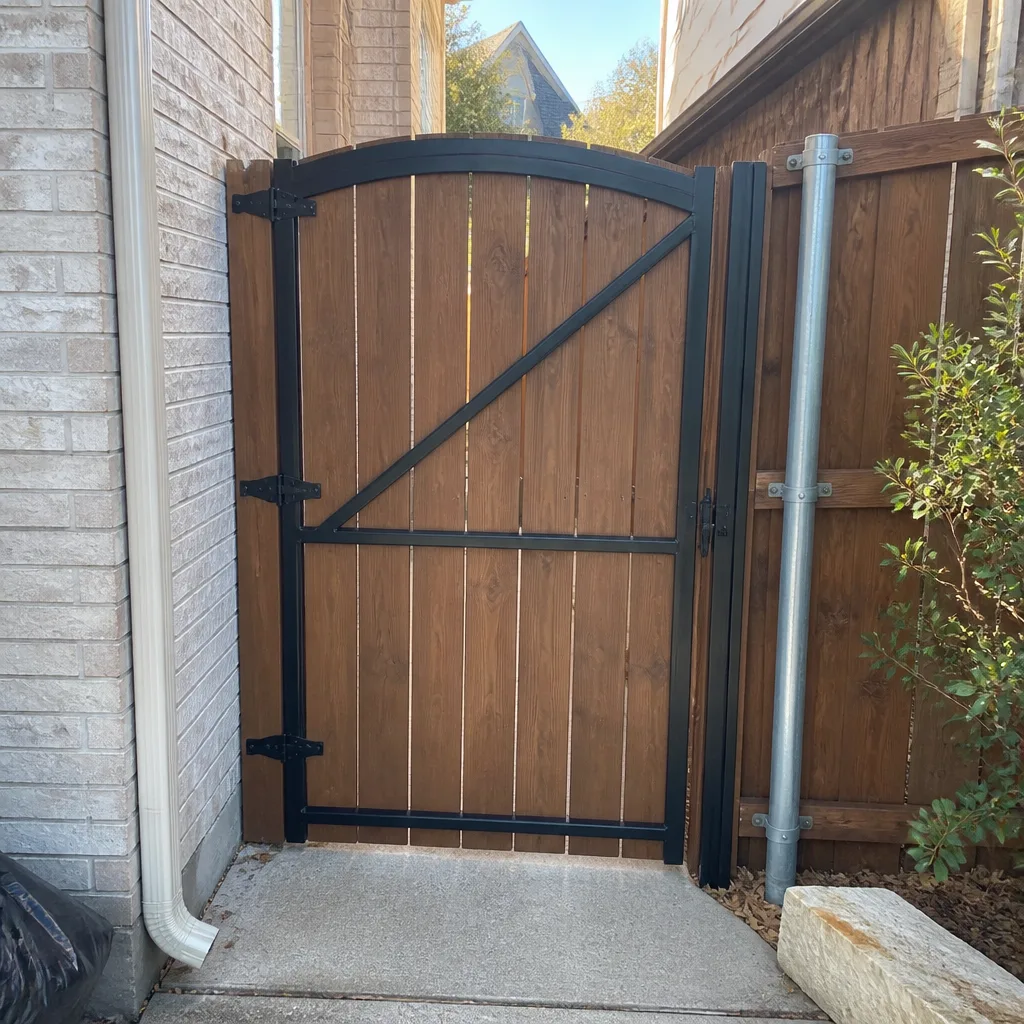 After
AfterGate Repair Permits, Codes & Inspections in TX: What You Need to Know
Most residential gate repairs in Texas never cross a permit desk, and that’s exactly why the exceptions cause so much trouble. A homeowner replaces a swing gate motor with a nearly identical model, no one pulls a permit, and three years later a Frisco home inspector flags the installation during a resale. The buyer’s lender hesitates. The deal stalls. The repair that cost $900 in 2021 suddenly costs $3,400 in negotiation credits plus a rushed permit application nobody wanted to file mid-escrow. This guide maps the actual triggers, the jurisdictional split between Frisco and Collin County, and what to do when unpermitted work surfaces at the worst possible moment.
Quick Answer
In Texas, most gate repairs (like-for-like motor replacement, hinge work, sensor realignment) require no permit at all. Permits typically enter the picture when you install a new gate operator where none existed, run line-voltage electrical to a gate, or replace structural posts and footings. In Frisco specifically, the city’s building safety division wants electrical permits for new operator circuits and structural permits when posts exceed certain dimensions or when a gate is added to a driveway that previously had none. When in doubt, call the City of Frisco Building Inspections division before the contractor starts, not after the invoice arrives.
Key takeaways:
- Like-for-like replacement: no permit in nearly all Texas residential cases
- New operator installation: electrical permit usually required in Frisco
- Structural post replacement or new gate installation: building permit may apply
- Low-voltage vs. line-voltage distinction determines which code path applies
- Unpermitted work surfaces at resale through buyer’s inspector language
- Documentation from prior contractors can be requested retroactively, but gaps are common
Table of Contents
- When a Gate Repair Actually Triggers a Permit in Frisco
- Collin County vs. City of Frisco: Who Has Authority Over What
- Low-Voltage vs. Line-Voltage: The Distinction That Decides Everything
- What a Failed Permit Inspection Looks Like at Resale
- How to Request Documentation from a Prior Contractor
- What to Do When Permit Records Don’t Exist
- What Permits Cost and How Long They Take in Frisco
- Common Mistakes to Avoid
- When to Call a Professional
- Frequently Asked Questions
BeforeAfterWhen a Gate Repair Actually Triggers a Permit in Frisco
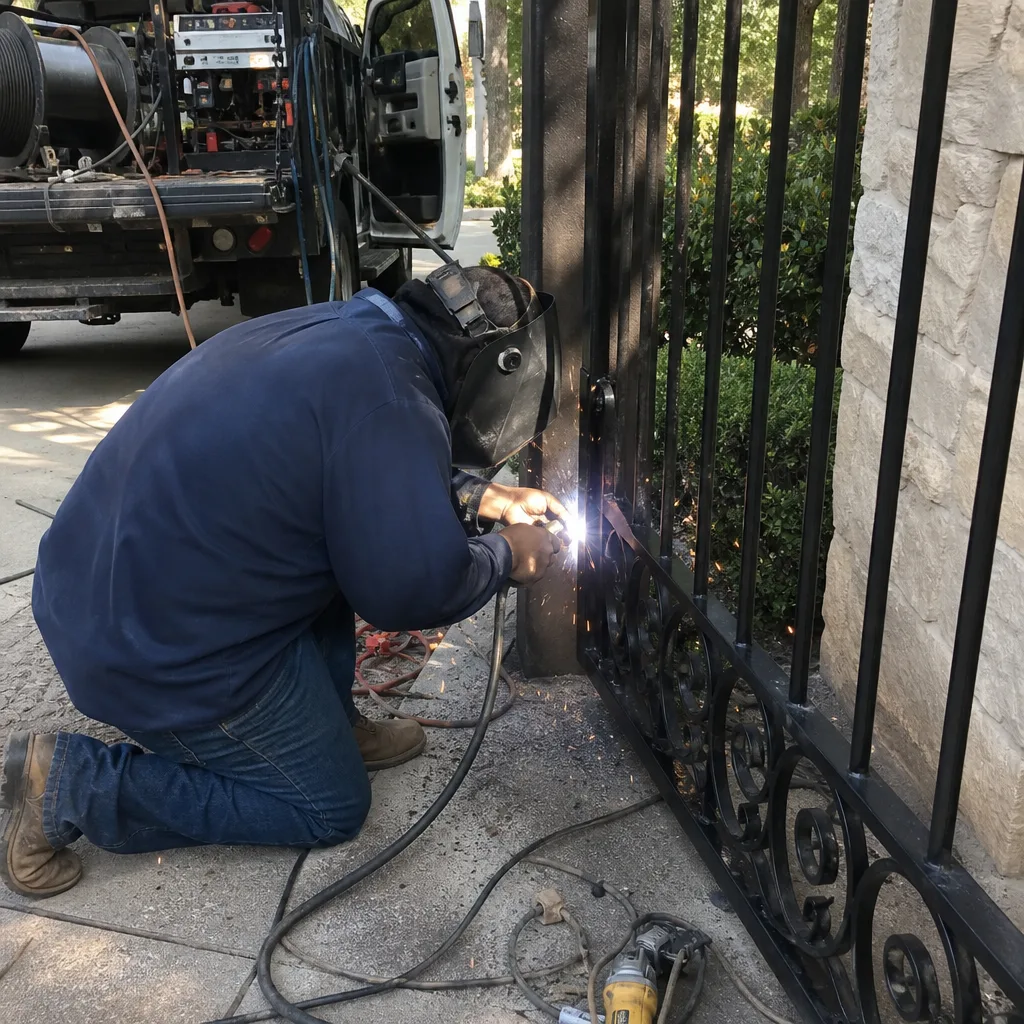
Here’s the rule that resolves 90% of the confusion: a permit is about what changes, not what gets fixed. If you’re replacing a failed LiftMaster arm with a new LiftMaster arm, rewiring a photo-eye that a lawn crew knocked loose, or welding a cracked hinge back to the post, no permit is required because the installation’s fundamental characteristics didn’t change. The gate is what it was before the repair, just working again. Frisco’s building safety division cares about new installations, modifications to structure, and changes to how power reaches the gate.
Specific triggers in Frisco include:
- New operator where none existed: Manual gate gets a motor, or a new gate with automation goes in where the driveway previously had no gate at all. Electrical permit required.
- Line-voltage circuit extension: Running 120V from the house or a subpanel to the gate location. This is an electrical permit, full stop.
- Structural post replacement: Replacing a rotted or bent gate post that requires new concrete footing. If the new footing exceeds the original dimensions or the post height changes, the city may want a structural review.
- Driveway access change: Adding a gate to a driveway that previously had none, particularly on a corner lot or where the gate sits within a setback or easement. Frisco’s development services reviews access changes.
- Stormwater or drainage impact: If a new gate or post footing alters grade or drainage flow, the city’s engineering division may flag it even when the building permit seems routine.
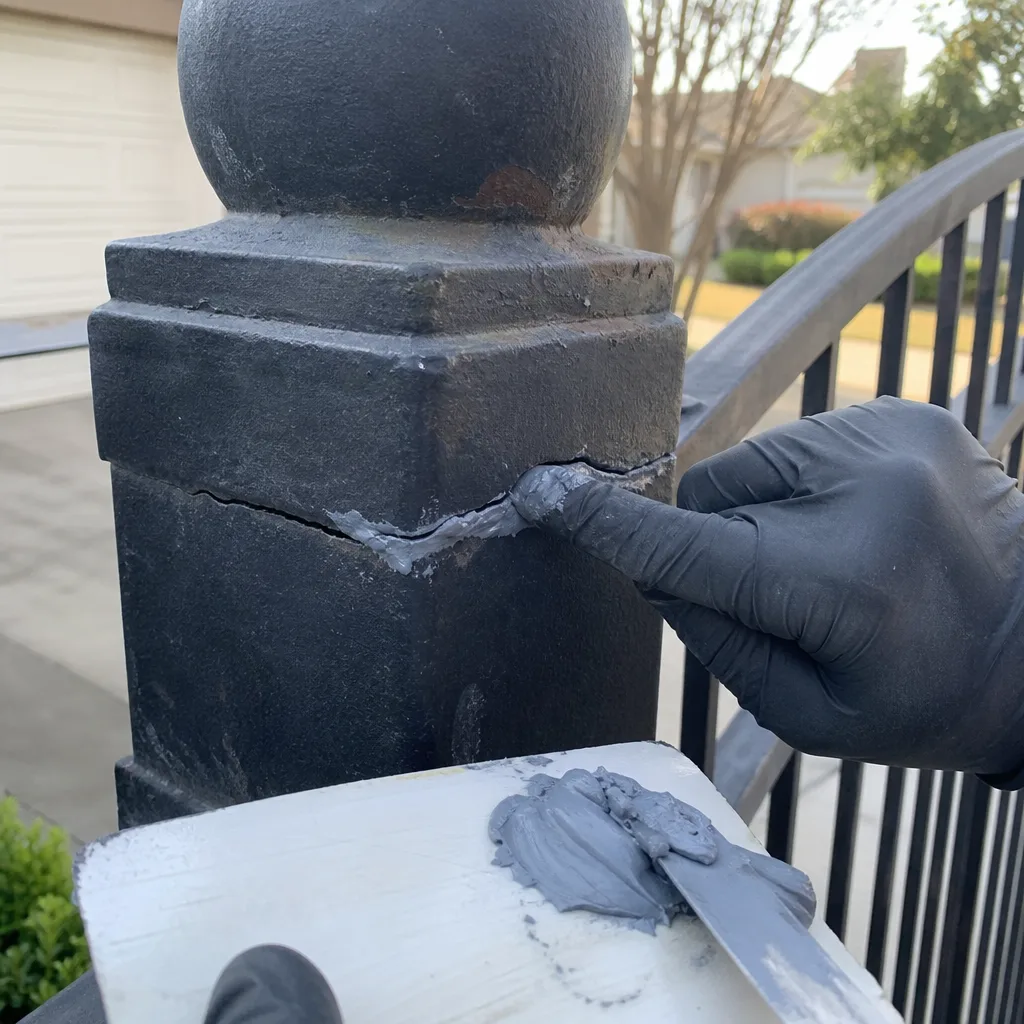
What does not trigger a permit: replacing a motor with a comparable model, swapping a control board, adjusting limit switches, replacing a receiver or remote, repairing a weld, replacing hinges or rollers, resetting a photo-eye, or servicing a gate motor and opener in Frisco. We’ve handled thousands of these and they’re maintenance, not modification.
In our experience, the easiest way to know is to ask one question: “Did the physical footprint, the power source, or the structure change?” If the answer to all three is no, you’re almost certainly in repair territory. If any answer is yes, make the call to the city before work starts.
Collin County vs. City of Frisco: Who Has Authority Over What
Frisco sits inside Collin County, but the two don’t share building code authority in the way homeowners sometimes assume. If your property is within Frisco city limits, the City of Frisco is the only building code authority that matters. Collin County does not issue building permits for properties inside an incorporated city. The county’s role is limited to unincorporated areas, and even then, building permits for gate work are rare. What the county does maintain is the deed records system, which matters when you’re trying to find permits from a prior owner, and the appraisal district records, which document improvements that may not match the permit history.
Here’s the practical sequence we recommend for anyone in Frisco:
- Confirm your property is inside city limits. If you have a Frisco water bill and city trash service, you’re in. If you’re on a well and septic, you may be in an ETJ (extraterritorial jurisdiction), where county rules may apply differently.
- Call the City of Frisco Building Inspections division first. Describe the work in plain language: “We’re replacing an existing gate motor with a new unit from Viking. The power is already run. Is this permit-exempt?” They’ll answer yes or no, and that answer goes into your notes.
- Ask for the answer in writing. A phone confirmation is good. An email from a plans examiner or permit technician is better. If the city says no permit is needed, that email becomes your resale protection.
- If the city says a permit IS needed, ask which type. Electrical? Building? Access? The permit type determines which inspection comes at the end.
The division of labor matters because homeowners sometimes call the county first, get told “we don’t handle that,” and assume that means no permit is needed anywhere. It’s not a dismissal of the requirement; it’s a dismissal of jurisdiction. The only authoritative answer for a Frisco address comes from Frisco.
Low-Voltage vs. Line-Voltage: The Distinction That Decides Everything
Gate automation runs on two broad power classes, and the code implications are completely different.
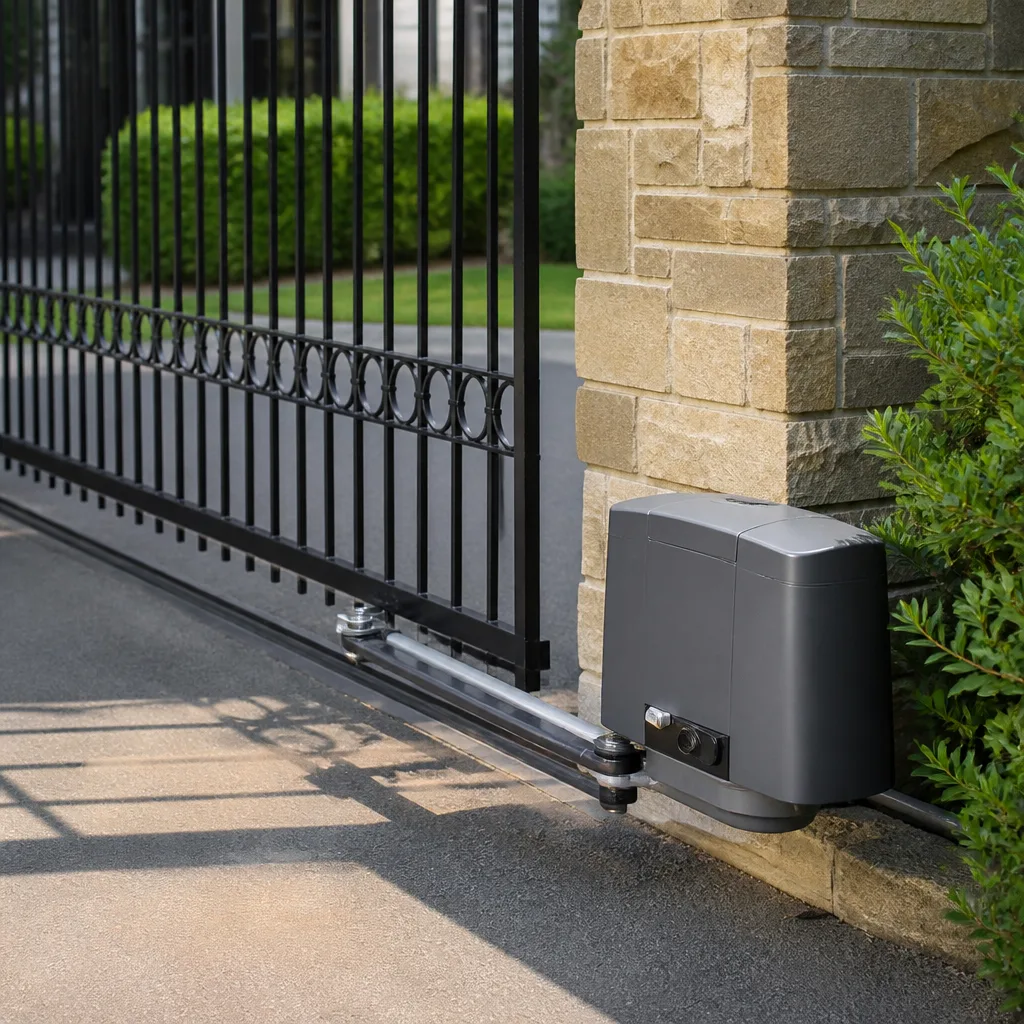
Low-voltage systems operate at 12V or 24V DC, typically powered by a transformer plugged into an existing outdoor outlet or wired to a low-voltage circuit. Brands like Ghost Controls and Mighty Mule dominate this space. The transformer converts 120V household current down to low voltage at the house, and only the low-voltage wire runs out to the gate. In most Texas jurisdictions including Frisco, a plug-in transformer arrangement needs no electrical permit because you’re not modifying the building’s electrical system. You’re plugging something in, same as a landscape lighting transformer. Low-voltage buried cable (Class 2 wiring) under 30V is exempt from most residential electrical code requirements under the National Electrical Code, which Texas has adopted with amendments.
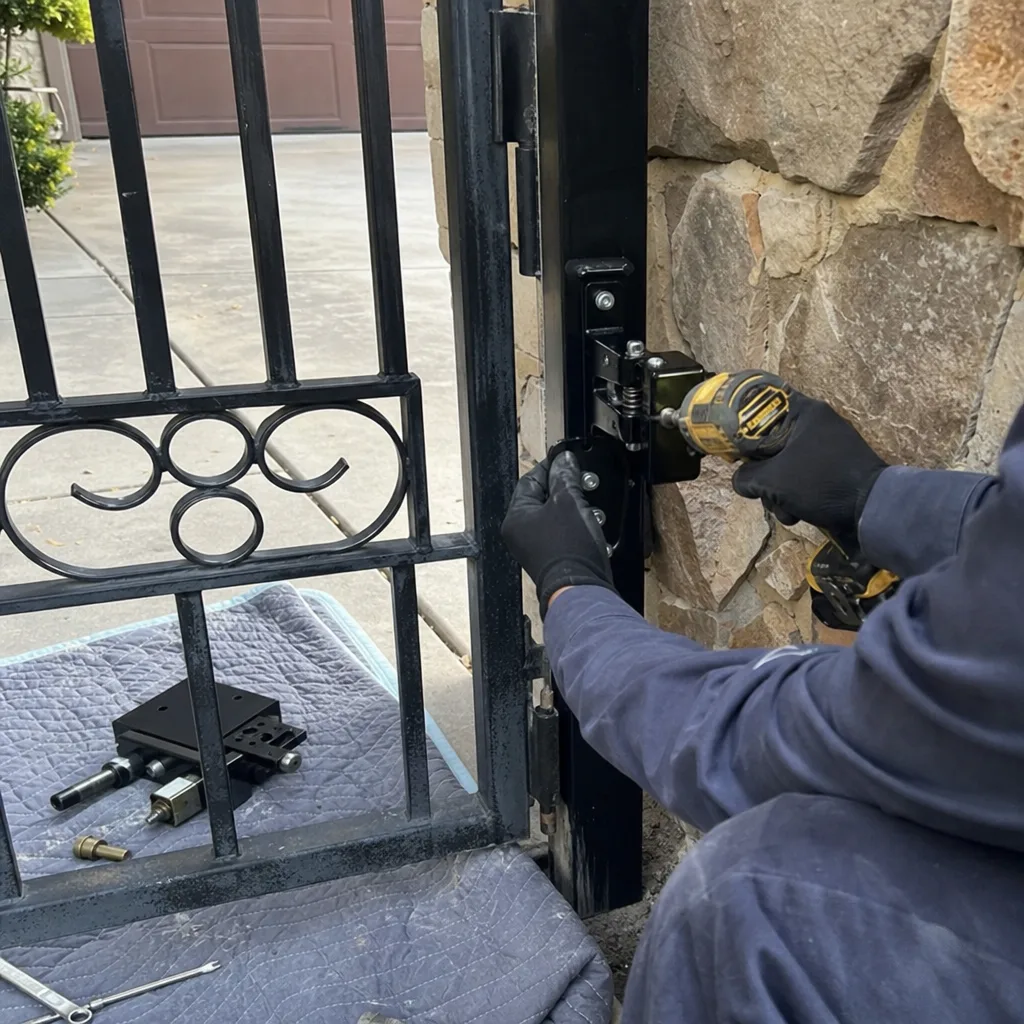
Line-voltage systems run 120V directly from the panel or a branch circuit out to the gate. Brands like Linear, Viking, DoorKing, and LiftMaster make many line-voltage operators, especially for heavier gates. If the circuit doesn’t already exist at the gate location, you’re adding new branch circuit wiring, which is absolutely an electrical permit in Frisco. The permit covers the circuit, the disconnect means at the gate, the burial depth of the conduit, and the final connection. An inspector will want to see the work before it’s covered with dirt or concrete.
Here’s a practical breakdown:
- Ghost Controls or Mighty Mule with plug-in transformer at an existing outlet: no permit in almost all cases
- Viking or DoorKing operator hardwired to an existing 120V circuit already at the gate: repair/replacement, no permit
- Linear operator going in where no power exists at the gate, requiring a new circuit from the panel: electrical permit required
- Any operator with a new concrete pad for the motor and new conduit run: may need both electrical and building review
One note that surprises people: some “low-voltage” systems still have a line-voltage component. A 24V motor with a hardwired transformer in a weatherproof box at the gate is not a plug-in installation. If you’re opening a junction box and splicing 120V, you’re in permit territory even if the motor itself runs low voltage.
What a Failed Permit Inspection Looks Like at Resale
When a buyer’s inspector walks the property in Frisco, they’re not looking for the absence of permits on general repairs. They’re looking for evidence that work was done and conditions that suggest it wasn’t inspected. Here’s the specific language we’ve seen from Frisco home inspection reports on gate issues:
- “Automated driveway gate present. No permit record located for electrical circuit serving gate operator. Recommend verification by licensed electrical contractor and retroactive permit if required.”
- “Gate posts appear recently replaced with new concrete. Footing depth and reinforcement not verifiable. Recommend seller provide permit documentation or structural certification.”
- “Gate operator installation appears newer than surrounding improvements. UL listing not visible at equipment. Recommend confirmation that installation meets current NEC requirements.”
- “Photo-eye sensors mounted at 8 inches and 32 inches, inconsistent with UL 325 entrapment protection requirements for this gate class. This is a safety concern.”
The inspector’s job is to flag risk. The buyer’s agent turns the flag into a negotiation. A $15,000 gate installation with no permit often becomes a $5,000 to $10,000 credit demand, a demand for the seller to obtain retroactive permits and pass inspection before closing, or in the worst case, a deal cancellation. For a repair that’s been fine for years, the problem isn’t the gate; it’s the paperwork. No paperwork means the buyer’s lender may not include the improvement in the appraisal value, which can kill financing.
The best protection is what we call documentation hygiene. Every time work is done on a gate, even no-permit maintenance work, keep a written record: what was done, what was replaced, the brand and model, and the date. Photograph the finished work. If a permit was obtained, keep the permit number and the inspection sign-off. When you sell, hand the folder to the buyer. It converts “I don’t know if this was done right” into “here’s the record.” We’ve watched this folder save sellers tens of thousands.
How to Request Documentation from a Prior Contractor
If a previous owner told you the gate work was permitted but never handed over the paperwork, you have a path to recover it. Texas law doesn’t require contractors to proactively file permit copies with homeowners, but most responsive companies keep internal records. Here’s the process we suggest:
- Start with a direct request. Contact the original contractor and ask for the permit application, the permit number, and the final inspection approval. Specifying what you need, rather than asking for “the paperwork,” gets better results.
- Check the city’s permit portal. The City of Frisco’s online permit lookup allows searches by address. Run your address and see what comes back. Many homeowners are surprised to find the permit exists, it was just never copied to them.
- Go to Collin County deed records. If the contractor recorded a notice of commencement, a mechanics lien release, or an affidavit, it will appear here. This is less common for gate work but happens on larger projects.
- Request the file from the city in writing. Texas Public Information Act requests are not just for media and lawyers. A simple written request to the City of Frisco permits and inspections division, referencing your address and asking for any permit history related to gate or electrical work, will produce copies if they exist.
- Ask the contractor for a letter if the permit doesn’t exist. A brief letter stating the work performed, the date, the scope, and the fact that no permit was required under the code then in effect, carries weight at resale. Most contractors will provide this for a reasonable documentation fee, or free if they value the relationship.
The edge case nobody anticipates: the contractor is out of business. Texas has no requirement that a closing company retain records, and gate-specific contractors often run lean. When the company is gone, records are usually gone too. That’s when the next section applies.
What to Do When Permit Records Don’t Exist
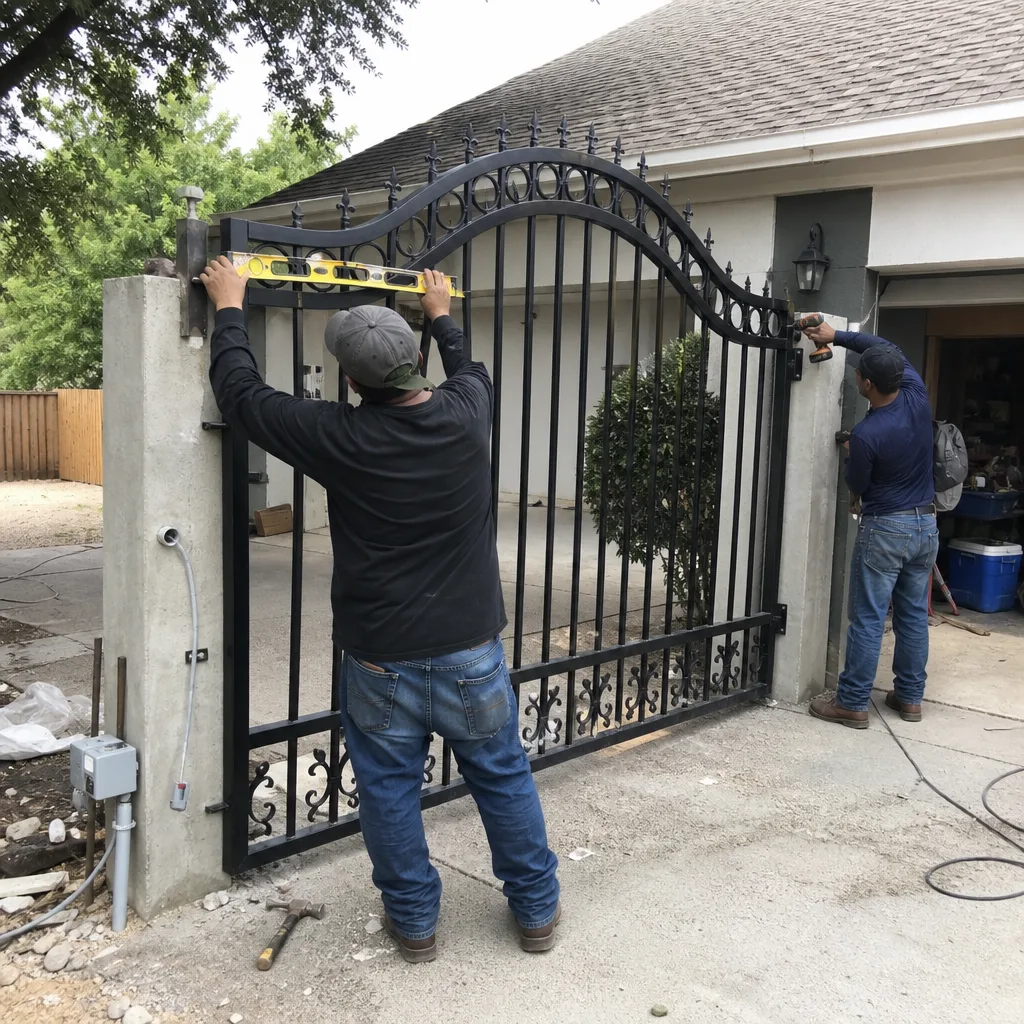
Here’s the uncomfortable truth: if the work was done unpermitted and the contractor is out of business or unreachable, there is no magical archive that produces a permit after the fact. What you can do is move forward honestly and reduce the risk.
Step one: get the installation inspected now by a licensed professional, even a different contractor than the one who did the work. We see this regularly. A homeowner in Frisco calls us because they’re selling and the buyer’s inspector flagged the gate. We inspect the installation, identify what’s actually wrong versus what’s just undocumented, and write a condition report. If the gate is genuinely code-compliant, the report becomes the seller’s evidence that the installation is sound even without the permit history. If it’s not compliant, the report gives you the fix list.
Step two: ask Frisco about a retroactive permit. The city will sometimes issue a permit for existing work after it’s been inspected, provided it meets current code. This is more likely for electrical work than structural work, because the inspector can see and test the circuit without excavating. If the city says retroactive isn’t possible, get the refusal in writing, because that itself is useful evidence at resale. It shows good faith and due diligence.
Step three: correct any actual code issues. UL 325 compliance for entrapment protection is the most common failure we find on unpermitted gate work. Missing photo-eyes, incorrect mounting heights, no secondary entrapment device on a heavy gate, no audible alarm on certain operator types. These are safety items, not just bureaucracy, and they’re fixable. A gate repair in Frisco that brings an older installation up to current UL 325 standards does more for resale value than any permit paperwork, because it shows the seller addressed the safety concern the inspector flagged. We write a report, photograph the corrections, and the seller hands both to the buyer at closing.
Step four: disclose what you know. Texas is a seller’s disclosure state. If you know work was done without a permit, or you know a permit was never issued, disclose it honestly in the seller’s disclosure notice. The disclosure converts a potential lawsuit into a negotiation item, and most buyers proceed when the disclosure comes with a current inspection report showing the gate is safe and functional.
What Permits Cost and How Long They Take in Frisco
Frisco permit fees for gate work are modest compared to the cost of the work itself, and the timeline is typically days, not weeks. Based on the city’s published fee schedule and our experience with gate installations in Frisco, here’s what to expect:
| Permit Type | Typical Fee Range | Typical Timeline |
|---|---|---|
| Electrical permit (new operator circuit) | $55-$120 | 2-5 business days |
| Building permit (structural post or new gate) | $75-$250 | 5-10 business days |
| Access/right-of-way review (if applicable) | Varies by scope | 7-14 business days |
| Re-inspection fee (if first inspection fails) | $50-$100 | 1-3 business days |
These are ranges, not quotes. The city adjusts fees periodically, and projects touching drainage, setback, or right-of-way issues can fall under a different review track with different fees. The point is that the permit itself is rarely the expensive part. The expensive part is scheduling around the inspection and coordinating the electrician’s availability with the gate contractor’s timeline. On a new installation where the gate contractor is running the project, a good contractor handles the permit application, the inspection scheduling, and the sign-off as part of the job. That’s what we do when we install or service gates in the Frisco area, and we hand the homeowner the signed permit card as part of the written record at the end of the job.
If the permit is denied or the inspection fails, the correction is usually specific: wrong conduit depth, missing GFCI protection at the outlet, photo-eye height out of compliance, missing disconnect. These are fast fixes when the contractor is still on site. They become expensive fixes if the contractor has already been paid and moved on to the next job, which is why we tell every customer the same thing: the job isn’t done until the permit is signed off and the record is in your hand.
Common Mistakes to Avoid
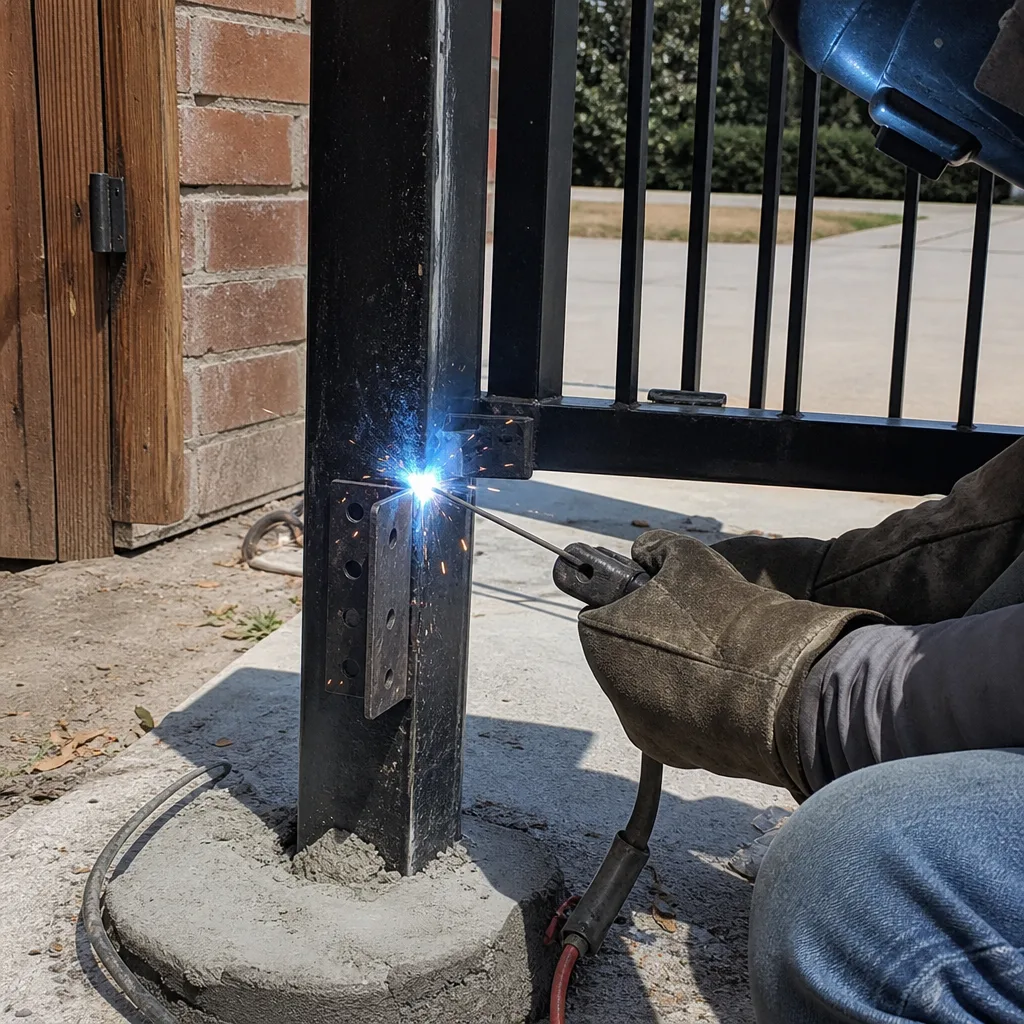
- Assuming “no permit needed” from a neighbor’s project means the same for yours. Your neighbor’s gate replacement may have used a plug-in low-voltage transformer at an existing outlet while yours needs a new 120V circuit. Different work, different rules, even on the same street.
- Trusting a verbal confirmation from the city without writing anything down. When the inspector or permit tech says “you’re fine,” ask for the email. If they won’t email, write a dated note with the person’s name and the time of the call. At resale, that note is evidence; your memory of the call is not.
- Paying the contractor in full before the final inspection passes. The inspection itself is part of the job. If you’ve paid 100% and the inspection fails, the contractor has no financial incentive to return for the correction. Hold a reasonable retention until the permit card is signed.
- Replacing a structural post without checking footing depth. A gate post in North Texas clay soil needs adequate depth and concrete. If the new footing is undersized and the gate sags a year later, that’s a structural issue an inspector will flag, even if no permit was technically required.
- Ignoring UL 325 entrapment protection requirements on an older gate. In Frisco, we see a lot of 10 to 15 year old gate operators that predate current entrapment standards. The gate opens and closes, so the homeowner assumes it’s fine. A buyer’s inspector checks photo-eye placement, the presence of a reversing edge, and audible alarm requirements. Failing those can derail a sale even with no permit issue at all.
- Hiding unpermitted work in the seller’s disclosure. Texas law requires honest disclosure, and undisclosed unpermitted work is one of the most common sources of post-closing lawsuits in residential real estate. Disclose it, document the current condition, and price the gate accordingly.
- Doing a DIY line-voltage run to the gate without a permit. We understand the impulse to save money, but when the gate doesn’t work and the buyer’s inspector opens the junction box, the lack of inspection is worse than the lack of function. A failed DIY electrical job costs more to fix than the original permit would have cost.
When to Call a Professional
You should call a gate professional rather than trying to work through permit and code questions alone in these situations: the gate operator is line-voltage and you’re not certain whether the circuit was ever permitted; you’re selling the home and the gate came up in the inspection report; you’re installing a new gate or new operator from scratch and want the permit process handled correctly the first time; the gate shows signs of entrapment protection failure, meaning it doesn’t reverse when something blocks its path; or the posts are leaning and you don’t know whether the footing is adequate. These are the cases where a wrong guess costs real money. Vance Gate Repair Frisco offers free estimates on gate repair, installation, and electrical work in the Frisco area. Call (940) 290-7996 and we’ll tell you what you’re looking at, in writing, before any work starts.
Frequently Asked Questions
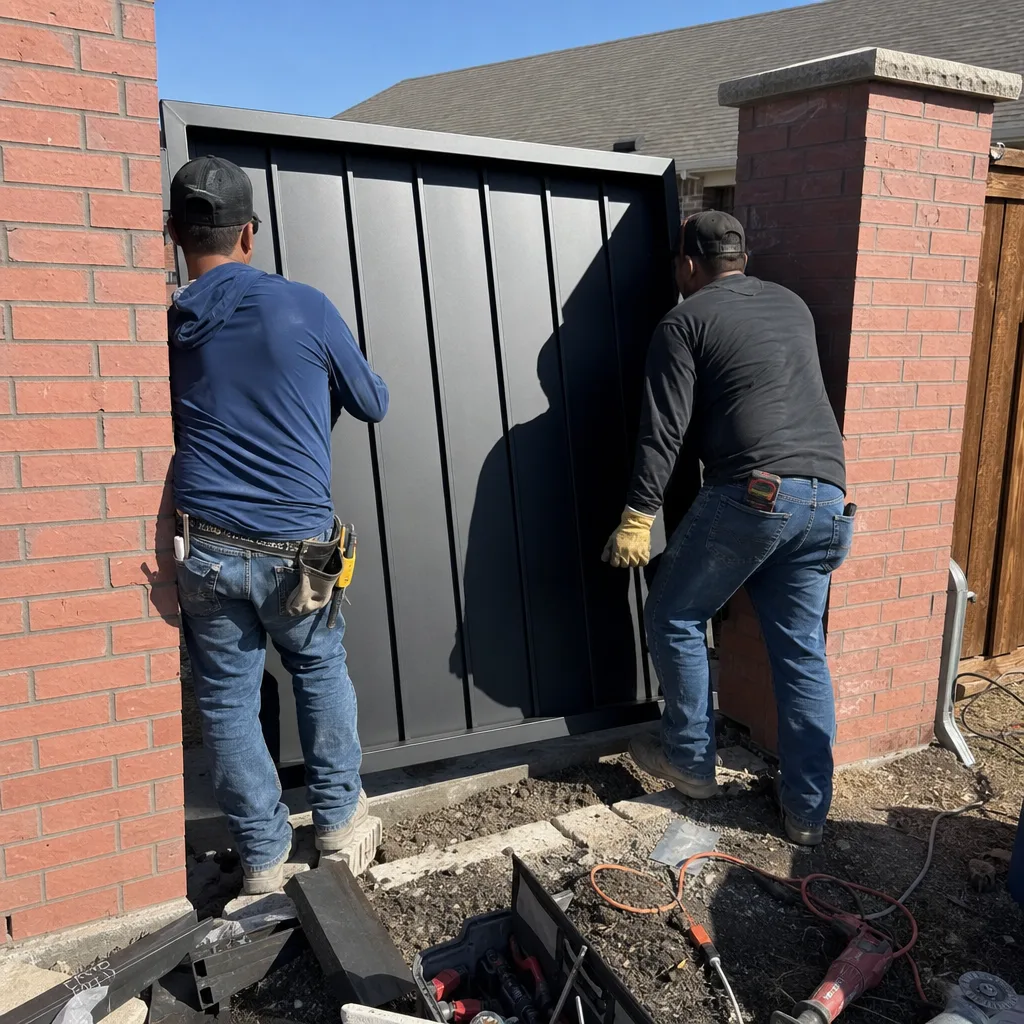
No, like-for-like motor replacement with no change to the power circuit is considered maintenance and does not require a permit in Frisco. Call (940) 290-7996 if you want us to confirm the classification of your specific repair before work starts.
Low-voltage systems (12V or 24V DC, typically plug-in transformer powered) are generally exempt from electrical permit requirements. Line-voltage systems (120V run directly to the gate) require a permit when a new circuit is installed. The deciding factor is whether power already exists at the gate location.
Electrical permits for gate operator circuits typically range from $55 to $120, and building permits for structural work run $75 to $250, depending on scope. The permit fee is usually far less than the cost of the gate work itself.
Sometimes, yes. The City of Frisco will issue a retroactive permit for existing work if it passes inspection and meets current code. Electrical retroactive permits are more common than structural ones because the inspector can verify the circuit without excavation. Call (940) 290-7996 if you need an inspection to support a retroactive permit application.
The buyer’s inspector documents the finding, and the buyer’s agent typically requests a credit, a repair escrow, or retroactive permitting before closing. A current inspection report from a qualified gate contractor showing the gate is functional and UL 325 compliant often resolves the negotiation.
Electrical permits for gate work typically take 2 to 5 business days, while building permits for structural work run 5 to 10 business days. Projects involving drainage, setback, or right-of-way review take longer, often 7 to 14 business days or more.
If your property is inside Frisco city limits, no. The City of Frisco is the sole building code authority. Collin County only issues permits for unincorporated areas, which do not include the vast majority of Frisco addresses.
Keep a record of what was done, the brand and model of any equipment, the date, the technician’s name, and photographs of the completed work. If a permit was pulled, keep the permit number and the final inspection sign-off. This folder is what you’ll hand a buyer if the gate ever comes up in an inspection.
The Bottom Line
Texas gate repair lives in a gray zone, and Frisco’s building code draws the line at modification, not maintenance. If you’re fixing what’s already there, you likely need no permit. If you’re changing the structure, the power source, or the footprint, you probably do. The practical strategy for any Frisco homeowner is simple: ask the city in writing before work starts, keep the record after it’s done, and never let a contractor walk away with the last paragraph of the story missing. The gate itself will last a decade. More guides & resources can help you stay prepared, but the paperwork either protects you at resale or costs you at resale. The difference is knowing which pocket the paperwork lives in.
Contact Us
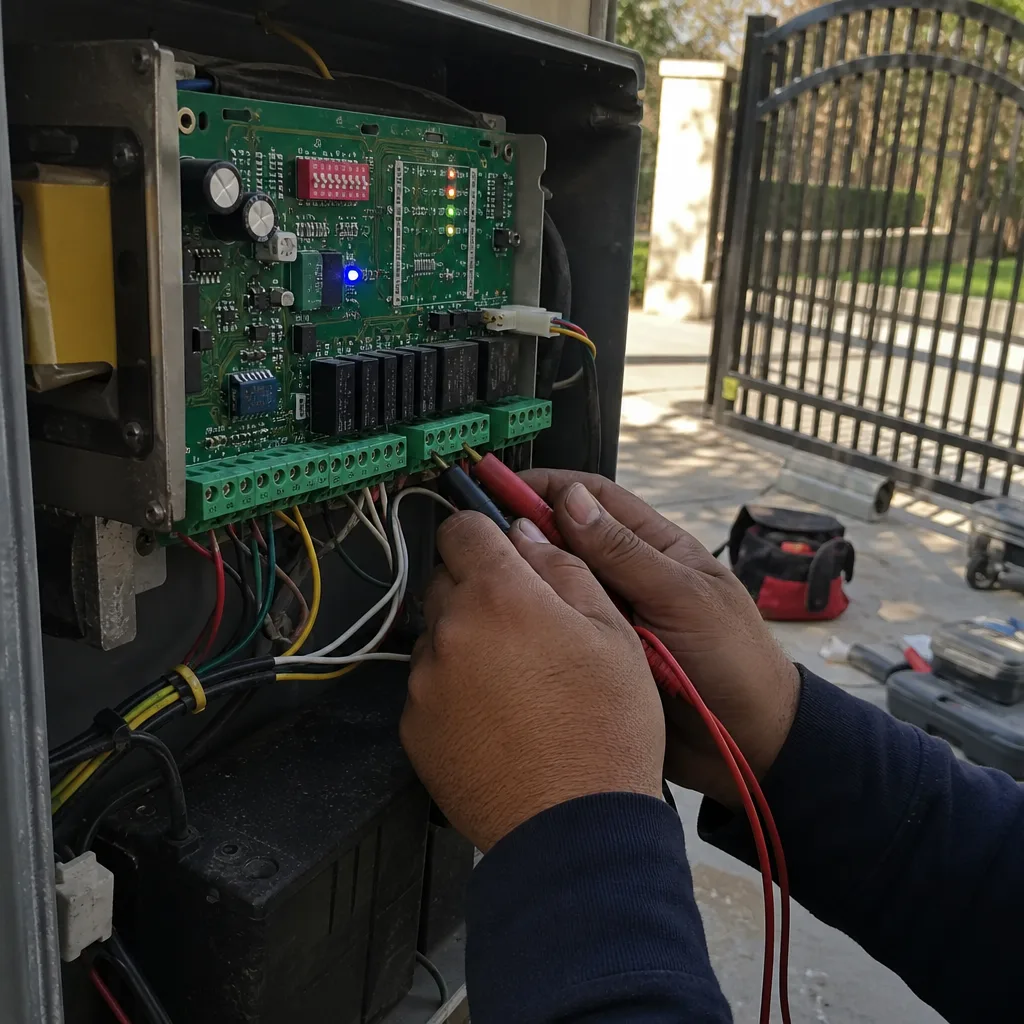
If you have questions about gate permits, codes, or inspections in Frisco, or if you need a gate repaired or installed with full documentation, call Vance Gate Repair Frisco at (940) 290-7996. We answer the phone 24 hours a day, give you a written price before any work starts, and leave you with a photographed record of everything we did.
Written by Adrian Vance, Owner at Vance Gate Repair Frisco, serving Frisco since 2014.